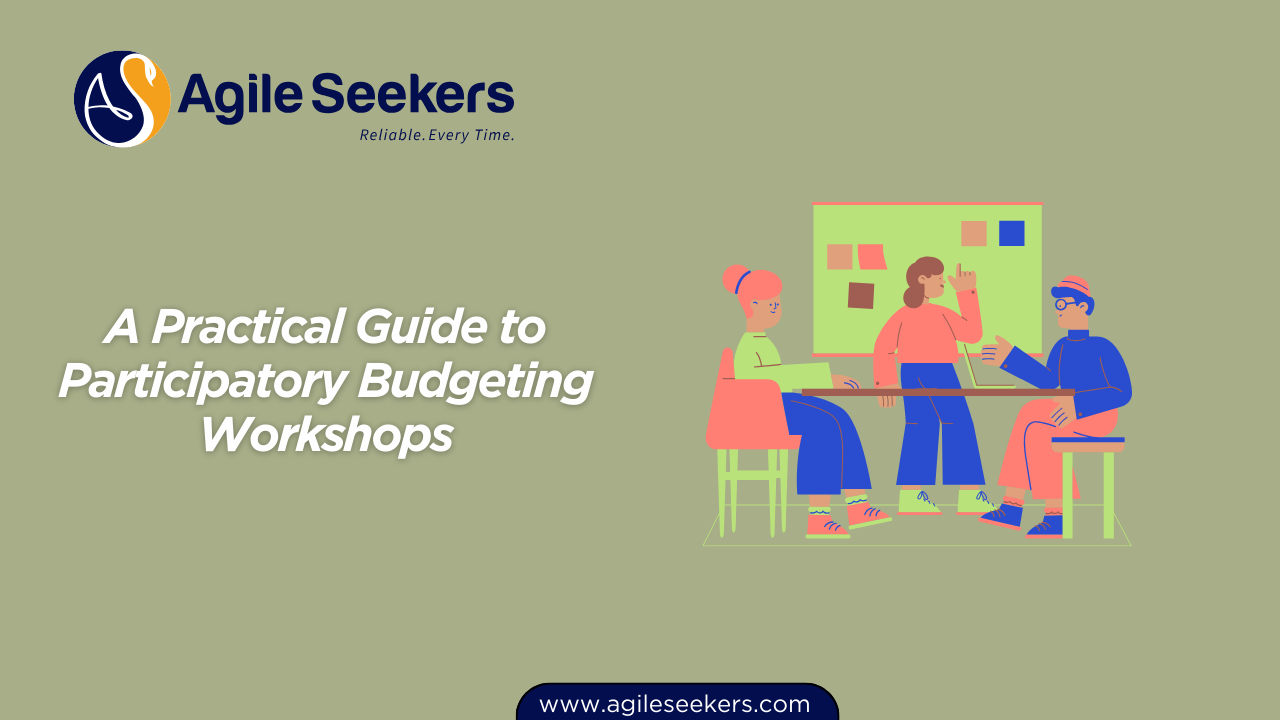
Participatory budgeting sounds simple on paper: bring the right people together, explore the available budget, and decide where funding should actually go. But anyone who has tried to run one knows the truth. These workshops test alignment, transparency, and decision-making in ways few other activities do.
Handled well, they unlock clarity, trust, and measurable prioritization. Handled poorly, they turn into endless debates with no ownership.
Here’s the thing: you don’t need complicated frameworks to run a good participatory budgeting workshop. You need structure, clarity, and a group that understands the decisions they’re making. This guide breaks it down so you can run these workshops with confidence.
What Participatory Budgeting Really Solves
Participatory budgeting brings stakeholders into the budgeting process instead of leaving decisions to a small leadership group.
Teams help decide where money flows, why it flows there, and what trade-offs matter. This approach makes sense in environments practicing Lean Portfolio Management, where the goal is to fund value, not pet projects.
When people actively participate in budget decisions, three things happen:
- Everyone understands real constraints.
- Investments start matching strategy instead of assumptions.
- Teams stop fighting for dollars and begin fighting for outcomes.
This shift alone makes participatory budgeting a valuable discipline for leaders who’ve trained through Leading SAFe certification.
Why Traditional Budgeting Fails
Before you learn the mechanics, it helps to understand why the old way breaks down:
- Decisions happen too far from the work.
- Priorities shift mid-cycle, but budgets don’t.
- Teams rarely see the bigger picture.
- Leaders lack visibility into emerging demand.
Participatory budgeting reverses this dynamic by giving teams a view into the entire investment field and involving them in the trade-off conversation.
The Core Elements of a Strong Participatory Budgeting Workshop
1. Prepare With the Right Inputs
You can’t expect people to make good decisions if they walk in blind. Give participants what they need ahead of time:
- Current portfolio vision
- Strategic themes
- Budget guardrails
- Historical performance and flow metrics
- Proposed value streams or initiatives
- Rough cost estimates and potential ROI
Product Owners and Product Managers offer stronger input when they know how to evaluate value and cost trade-offs, skills developed in the SAFe POPM certification.
A helpful external reference is the Scaled Agile guidance on Lean Budget Guardrails, which clarifies how funding boundaries work inside SAFe portfolios.
2. Invite the Right Mix of People
A participatory budgeting workshop is only as strong as the voices in the room. Bring in:
- Business owners
- Product management
- Architects
- Delivery leads
- Release Train Engineers
- Lean Portfolio leaders
- Representatives from key teams
Inside ARTs, trained Scrum Masters help maintain flow and structure, skills they strengthen in the SAFe Scrum Master Certification.
3. Structure the Workshop Around Clear Steps
Here’s a structure that keeps the conversation focused and productive.
Step 1: Align on strategy
Start with a short recap of the portfolio vision and strategic themes. Just enough to anchor the room.
Step 2: Present the initiatives
Portfolio leaders and product managers walk participants through each initiative, its estimated cost, and expected outcomes.
Step 3: Explore trade-offs
This is where the real conversation begins. People ask questions such as:
- What outcome does this initiative support?
- Can we delay it without hurting strategy?
- Does this unlock future opportunities?
- What’s the cost of not doing it?
Step 4: Allocate budgets using lightweight voting
Participants receive a simulated budget and allocate funding to initiatives they believe bring the most value.
Step 5: Review and refine
Summarize the allocations, discuss mismatches, and align on the final investment mix.
Inside a SAFe environment, this becomes smoother when an RTE facilitates the session. The SAFe Release Train Engineer Certification helps leaders master this skill.
What Makes a Participatory Budgeting Workshop Effective?
You can have great inputs and still walk away with misalignment. What determines success is how you run the session.
- Keep discussions focused on outcomes, not features.
- Visualize everything to maintain shared understanding.
- Highlight constraints early.
- Avoid deep technical debates.
- Let the group explore, then converge.
Facilitation skill matters, and teams notice the difference when a leader with advanced Scrum Master capabilities, such as someone trained through the SAFe Advanced Scrum Master Certification, guides the discussion.
Common Pitfalls That Ruin Budgeting Workshops
- Two senior leaders dominate the conversation.
- No shared understanding of cost.
- Too much data overwhelms participants.
- Past experiences reduce trust in the process.
- The session tries to finalize every detail in one shot.
Great workshops feel structured but flexible. They create space for debate but don’t let the debate derail the goal.
How to Use Voting Methods That Actually Work
Voting isn’t a popularity contest. It’s a tool to surface priority.
Dot Voting
Participants place dots on initiatives they see as the most valuable.
Weighted Voting
Give participants “play money” to distribute across initiatives.
Paired Comparison
When disagreement is high, compare initiatives two at a time to reveal consistent preferences.
How Product Managers and Owners Can Prepare
To contribute meaningfully, PMs and POs should enter the session with:
- A strong problem statement for each initiative
- Basic cost and capacity assumptions
- Expected outcomes
- Clear alignment with strategic themes
- Metrics to justify investment
These skills are emphasized in the SAFe POPM certification, which prepares professionals for value-based decision-making.
What Happens After the Workshop
The workshop isn’t the finish line. The follow-through matters.
- Convert investment decisions into real budget allocations.
- Update the portfolio Kanban.
- Communicate constraints and decisions clearly.
- Monitor execution through flow metrics and progress indicators.
Scaled Agile’s guidance on flow metrics is a useful external reference for tracking improvement and value delivery.
When to Run Participatory Budgeting Sessions
Most organizations hold these sessions:
- Quarterly
- At the start of PI Planning
- During major strategy shifts
- When the portfolio changes direction
Leaders who’ve completed SAFe agilist certification already understand how participatory budgeting connects with Lean Portfolio Management rhythms.
Tips From Teams That Do This Well
- Break initiatives into smaller pieces before the workshop.
- Surface risks early.
- Use realistic constraints.
- Encourage participants to challenge assumptions.
- Make the workshop engaging and collaborative.
Final Thoughts
Participatory budgeting isn’t about shifting power. It’s about widening understanding and making smarter investment decisions through shared insight.
For leaders and teams who want to strengthen the skills needed to participate in or facilitate these workshops, certifications such as the SAFe Scrum Master Certification, SAFe Advanced Scrum Master Certification, SAFe Release Train Engineer, Leading SAFe training, and SAFe POPM certification help build the confidence and capability these sessions demand.
Also read - Moving From Annual Budgeting to Continuous Funding in SAFe
Also see - How to Run Portfolio Sync Meetings Without Turning Them Into Status Calls