Delivery professionals, team leads, Scrum Masters, and managers improving service flow


Kanban
Team Kanban Practitioner (TKP) Certification Training
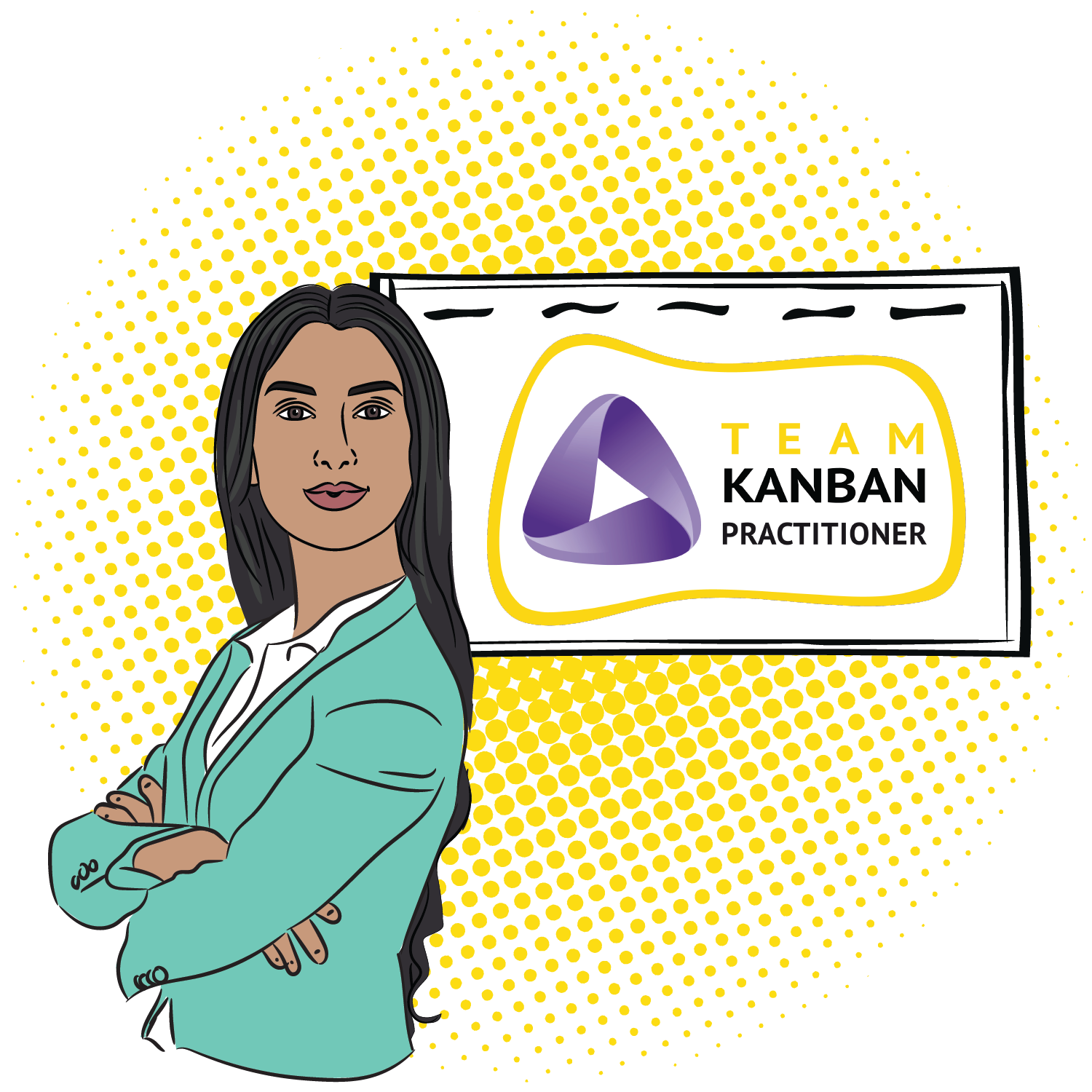
Kanban University certification courseKanban
Team Kanban Practitioner (TKP) Certification Training
Build practical, job-ready skills through live instructor-led Team Kanban Practitioner (TKP) Certification Training with expert guidance and structured learning support.
Duration1 day
FormatLive online
LearningInstructor-led
CredentialTKP
Understand the basics, motivation, and benefits of the Kanban Method for your team
Experience the benefit of WIP limits to improve flow
Run Kanban meetings that focus on the work and help the team organize around it
4.9/5 learner rating10,000+ learners sitewideLive instructor-led
Next live online batch
Enrolment openOct 21 – Oct 22, 2026
BatchWeekday Batch - 2 Sessions
Time06:00 PM – 10:00 PM IST
TrainerSurya R Gandi
Course fee₹18,000+ applicable GST
Standard fee₹24,999
- Live Kanban learning grounded in real service and workflow decisions
- Practical exercises, flow evidence, policies, and improvement guidance
- Course-completion and credential-pathway support
Secure Razorpay payment is available after you choose a batch. Final GST and invoice details are shown before payment.
Choose with clarity
What to know before you enrol
Course-specific fit, outcomes, inclusions, and payment checks in one place.
Visualisation, pull, WIP, policies, flow evidence, feedback loops, and evolutionary improvement
Live Kanban learning, practical exercises, course resources, and credential pathway guidance
Confirm the authorised course, trainer, batch, GST-inclusive total, and credential terms
Compare dates and enrol online →Need an invoice or team booking?
A practical first step into Kanban
Organize Team Work with TKP
Team Kanban Practitioner is designed for team members and leaders who want to improve visibility, communication, collaboration, and flow without launching a disruptive transformation.
Learn the six general practices, three change-management principles, pull systems, WIP limits, Kanban meetings, System Lead Time, and the first improvements you can apply immediately.
TKP Course at a Glance
- Course duration
- 1 day / 8 hours
- Official course
- Team Kanban Practitioner
- Credential
- TKP
- Credential basis
- Course completion
- Prerequisites
- None required
- Best suited for
- Teams and new practitioners
 +91-9143964396
Course Highlights

Understand the basics, motivation, and benefits of the Kanban Method for your team
Experience the benefit of WIP limits to improve flow
Run Kanban meetings that focus on the work and help the team organize around it
Apply the first Kanban practices in day-to-day work and understand the next step
Become faster and more responsive, with better risk management and governance
Understand pull systems and how they help reduce overburdening
Track System Lead Time and use Lead Time distributions
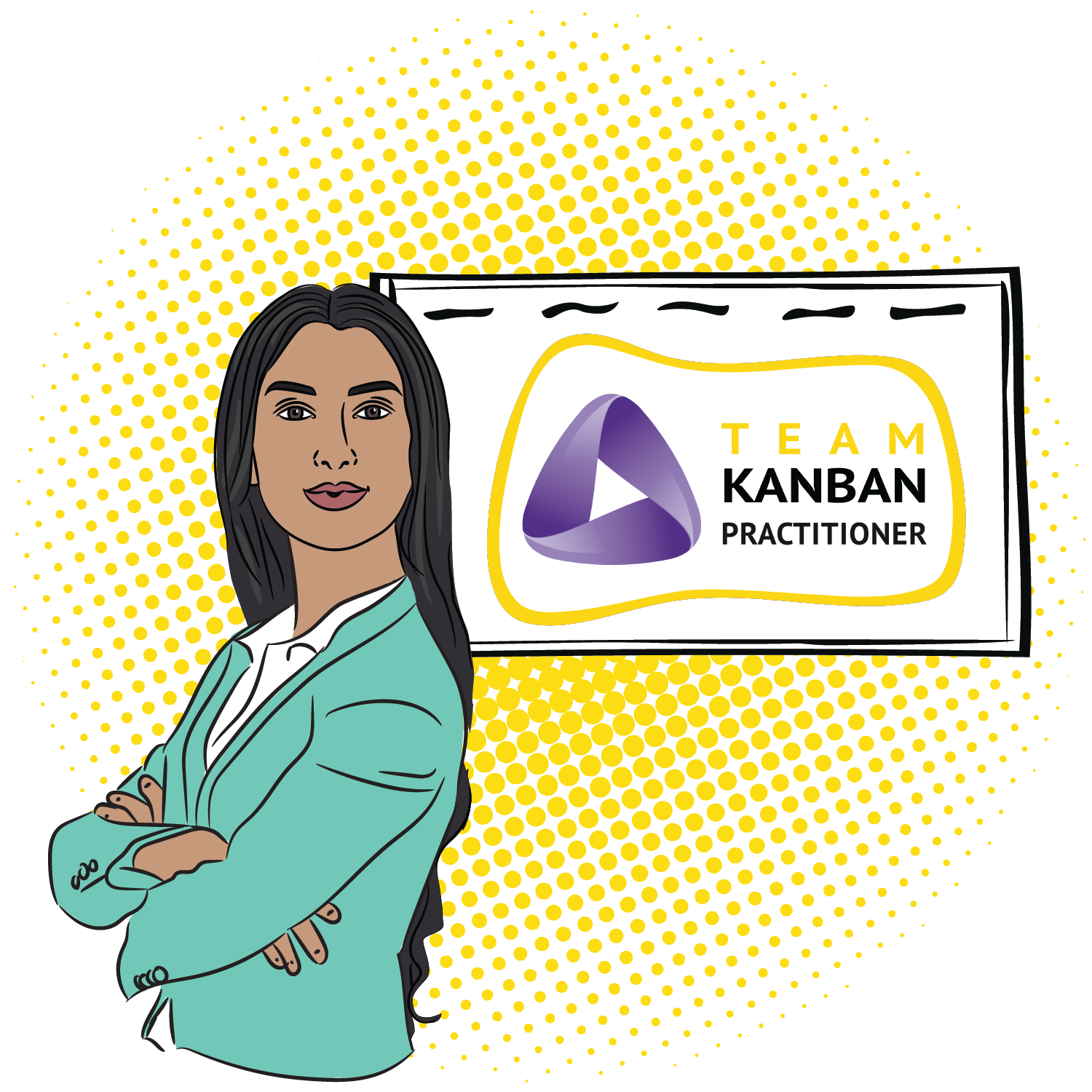
Career relevance
Why earn the Team Kanban Practitioner (TKP) Certification Training?
Strengthen practical capability for roles that value structured delivery, collaboration, and measurable business outcomes.
10th–90th percentile thresholds
Median pay$101,190
Projected U.S. employment growth, 2024–34
Closest related occupation: Management Analysts
- Service Delivery Managers
- Team Leads
- Flow Managers
- Agile Practitioners
Labor-market benchmark for the closest related occupation, not a certification-specific salary or employment guarantee. Earnings vary by location, experience, role, and employer.
Source: U.S. Bureau of Labor StatisticsTrusted by teams
Organizations whose professionals we have trained







Course Curriculum

Understand the Kanban Method, its humane evolutionary approach, and why teams use it to improve delivery.
Show different work item types, workflow, blockers, risks, and policies on a team Kanban board.
Experience WIP limits, pull, reduced overburdening, and the shift from starting work to finishing it.
Observe work movement, System Lead Time, bottlenecks, and impediments that prevent smooth flow.
Make policies explicit and establish feedback loops and team meetings focused on the work.
Apply the six general practices and three change-management principles in day-to-day team work.
Course Fee
Live online classroom
Learn in Expert-Led Live Sessions
One-day live online class
Certificate of completion and applicable Kanban University credential
Interactive exercises, simulations, and practical application
Official Kanban University course curriculum
Live instructor-led training by an Accredited Kanban Trainer
Upcoming Batches
New batches opening soon
View all schedule₹24,999
₹18,000
Enterprise Training
Upskill and Reskill Your Teams
Customized Corporate Training
Practical action plan for applying the learning at work
Remote or onsite delivery options
Examples adapted to your services and workflow
Private delivery for teams and organizations
About the Official Course and Credential
Participants receive a certificate of completion and the Team Kanban Practitioner credential after completing the official course.
TKP is designed for contributors and leaders who want a practical introduction before progressing to system design.
TKP is not required for the KMP credential, although beginners may find it the best starting point.
Team members, team leads, managers, project professionals, product professionals, Scrum practitioners, and anyone new to Kanban.
Learning Objectives
Understand Team Kanban
Explain the basics, motivation, and benefits of Kanban for a team.
01

Improve Team Flow
Use visualization, WIP limits, pull, and flow conversations to finish work more effectively.
02
Run Kanban Meetings
Focus team coordination on work, risk, blockers, and flow.
03
Start Improving
Apply the first Kanban practices immediately and identify a sensible next step.
04
Prerequisites
All experience levels are welcome. No previous Kanban training or experience is required.
Apply Team Kanban at Work
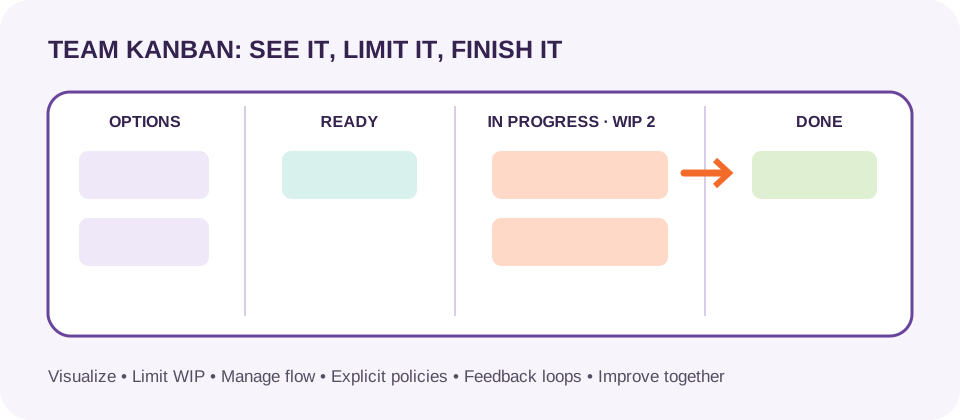
Use TKP to organize team work, improve daily collaboration, and establish simple flow practices without changing roles or launching a large transformation.
Visualize Team Work
- Show work and workflow
- Distinguish work item types
- Expose blockers, risks, and aging items
Workplace outcome
A team that can see its workload and coordinate around facts.
Limit WIP
- Set team-level WIP limits
- Pull work when capacity is available
- Swarm on blocked or aging work
Workplace outcome
Better focus, less multitasking, and faster completion.
Manage Flow Daily
- Run flow-focused Kanban meetings
- Notice where work stops moving
- Coordinate action instead of reporting status
Workplace outcome
Shorter, more useful team conversations and quicker problem resolution.
Improve Collaboratively
- Make team policies explicit
- Track System Lead Time
- Run small experiments and review their effect
Workplace outcome
Continuous improvement owned by the people doing the work.
Frequently Asked Questions
Participants receive the Team Kanban Practitioner credential and a certificate of completion.
The official format is one in-person day or eight hours of virtual training.
No. It is an optional entry point that is especially useful for people who are new to Kanban.
No. KMP requires Kanban System Design plus an approved second course such as Kanban Systems Improvement.

Struggling to Find the
Perfect Schedule?
Independent learner reviews
What learners say about AgileSeekers
 5.0 out of 5View Google reviews
 4.7 out of 5View all 49 reviews
Trustpilot★★★★★
“Clear explanations, patient mentoring, and deep expertise made the SAFe certification journey insightful and achievable.”
N
View on TrustpilotNithin MJul 2026
Trustpilot★★★★★
“Surya makes complex concepts easy to grasp and ensures learners are well prepared for SAFe certification.”
N
View on TrustpilotNagbushan SriJul 2026
Google★★★★★
 Google
“The SAFe POPM training was well structured, interactive, and packed with practical real world examples.”
N
View on GoogleNishitha A.Jun 2026
Trustpilot★★★★★
“The training was informative, well structured, easy to follow, and supported by clear practical examples.”
A
View on TrustpilotArun KumarJun 2026
Trustpilot★★★★★
“The PSPO trainer explained concepts clearly with practical examples, making product ownership easy to understand and apply.”
R
View on TrustpilotRajinikanth VarmaJul 2026
Trustpilot★★★★★
“The SAFe AI Empowered POPM course was well structured, relevant, practical, and aligned with current industry practices.”
A
View on TrustpilotAastik KumarJun 2026
Take the next step
Ready to Start Team Kanban Practitioner (TKP) Certification Training?
Explore upcoming live batches or speak with a course advisor to find the right schedule for your goals.

