Standard work protects attention for leadership responsibilities
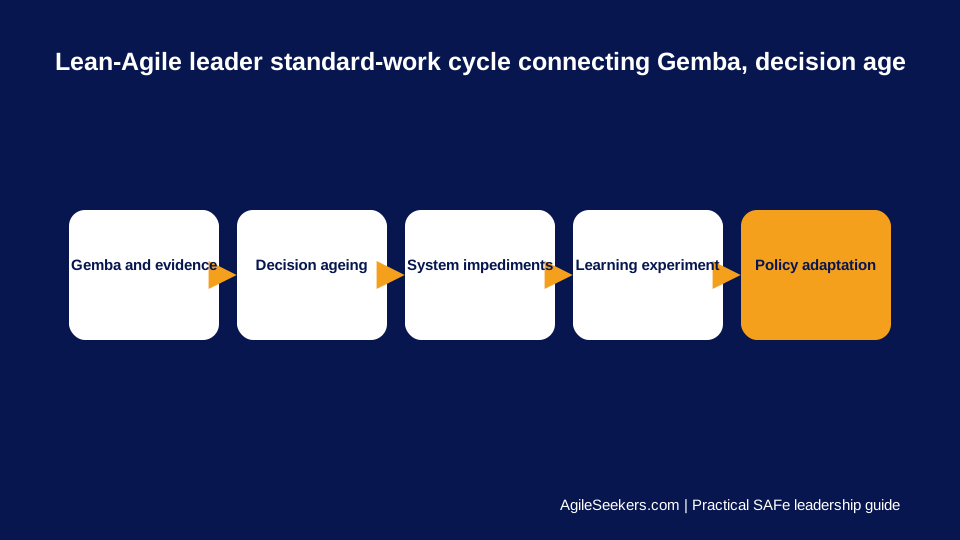
Leader standard work is a repeatable cadence for observing the system, developing people, making timely decisions, and improving policies. It should not become a checklist for inspecting team task compliance. In a SAFe environment, it helps leaders remain connected to customers and value streams while preserving decentralized execution.
Design daily, weekly, and PI-level attention
| Cadence | Leader attention |
|---|---|
| Daily or frequent | Material risk, blocked decisions, customer or operational harm |
| Weekly | Decision ageing, WIP, quality, people capacity, and cross-team constraints |
| ART cadence | PI Objectives, System Demo evidence, flow, risks, and improvement |
| Portfolio cadence | Strategy, budgets, epic evidence, value-stream performance |
| Personal reflection | Behavior, assumptions, feedback, and delegated authority |
Use Gemba without turning it into surveillance
Go to where value is created to understand workflow, customer conditions, queues, and the experience of people doing the work. Ask what prevents a good outcome and which policy leadership owns. Do not use Gemba to bypass Product Owners, direct tasks, or collect names for blame.
A decision-ageing review
- List material decisions with start date and affected outcome.
- Separate local decisions from those requiring broader authority.
- Remove duplicate approvals and clarify guardrails.
- Set a needed-by date and responsible decision owner.
- Review whether the decision reduced delay or created new constraint.
Protect learning and people development
- Schedule coaching conversations before performance problems.
- Review experiments and evidence, including stopped ideas.
- Recognize early risk reporting and cross-boundary help.
- Inspect workload and transformation fatigue.
- Change incentives that conflict with flow or collaboration.
Leading SAFe training provides the leadership principles behind this practice. SAFe RTE certification training helps leaders interpret ART-level flow and impediment evidence.
Begin with three behaviors that address a real organizational problem. Review them with employees after thirty days. Standard work is useful when it improves the system and leader reliability, not when it produces another compliance dashboard.
Worked example: approval ageing
A leader discovers that security exceptions wait twelve days because three committees review the same evidence. Instead of urging teams to escalate sooner, the leader maps decision classes, agrees one accountable authority, automates repeatable checks, and creates a forty-eight-hour response policy for material exceptions. Weekly standard work reviews ageing and customer risk. The result is judged by decision time, exception quality, security outcomes, and whether teams can act safely without personal escalation networks.
What standard work must never normalize
- Attendance at every team event.
- Direct assignment of team tasks.
- Requests for duplicate status outside visible systems.
- Immediate answers before relevant knowledge is heard.
- Escalation that bypasses agreed roles.
- Metrics used to rank people or pressure estimates.
Leader routines should evolve with organizational capability. As guardrails improve and decisions move closer to knowledge, reduce inspection and invest more attention in strategy, customer evidence, people development, and systemic constraints. A routine that once protected a transition can later become the queue it was designed to remove.
Review these routines directly with employees and affected value-stream leaders every Planning Interval.