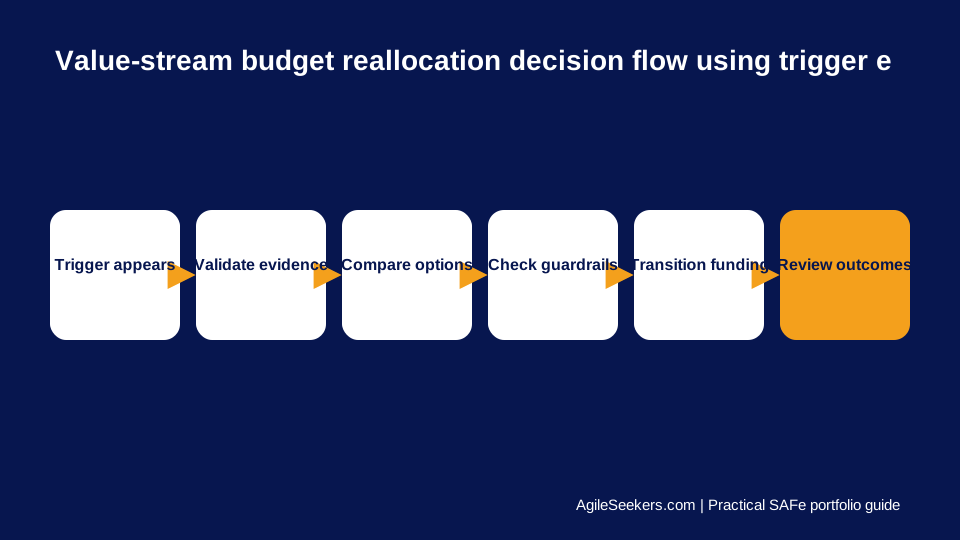
Dynamic funding still needs stability
Lean budgets allow a portfolio to adjust funding as strategy and evidence change. Moving money too slowly protects obsolete priorities; moving it too frequently destabilizes teams, architecture, suppliers, and operational commitments. Reallocation should respond to material evidence through an understood decision process rather than quarterly negotiation power.
Recognize legitimate triggers
| Trigger | Evidence to inspect | Possible response |
|---|---|---|
| Strategic change | Theme, market or regulatory shift | Increase, reduce or redirect capacity |
| Weak benefit | Leading indicators remain below threshold | Narrow, pivot, stop or run a final test |
| Demand change | Customer volume or service mix moves | Adjust operational and development capacity |
| Solution risk | Reliability, security or lifecycle exposure grows | Protect remediation or replacement investment |
| New option | High-value opportunity with a closing window | Fund discovery before full reallocation |
Compare options beyond moving a percentage
A budget decision can sequence an epic, share a platform capability, reduce scope, retire a solution, change supplier demand, or fund a time-boxed discovery option. Show the effect on existing commitments, people, knowledge, architecture, and outcomes. Money may move instantly in a spreadsheet while effective capacity takes months to change.
Use a transition envelope
- Work and obligations that must finish safely.
- Capabilities and people that should move together.
- Supplier, contract and compliance consequences.
- Architecture or platform capacity shared across value streams.
- Date when the new allocation becomes operationally real.
- Guardrails and outcome evidence for the changed funding.
Reallocation decision record
- Name the trigger and confidence in its evidence.
- Record options, displaced outcomes and transition cost.
- Identify authority and guardrail implications.
- Set allocation range, effective date and accountable owners.
- Review whether value, flow and stability changed as expected.
Leading SAFe training supports Lean budgeting and portfolio trade-offs. SAFe RTE certification training provides the delivery-system perspective needed to understand capacity and transition effects.
Reallocation is successful when portfolio resources move toward better options while the value streams remain capable of delivering and operating solutions. A faster budget decision that leaves stranded work and critical knowledge loss is not strategic agility.
Worked reallocation scenario
A digital-service value stream receives growing demand while a legacy-channel value stream declines. Moving the entire difference immediately would strand regulatory work and specialist knowledge. Portfolio Leadership funds a short demand-validation period, protects mandatory legacy capacity, moves a cross-functional group with its platform dependencies, and sets a six-month retirement milestone. Allocation changes in stages as digital adoption and legacy stability meet defined thresholds.
Protect people from spreadsheet volatility
Funding value streams means funding long-lived capabilities, not treating individuals as interchangeable budget units. Discuss skills, team cohesion, product knowledge, leadership load, and supplier constraints. Prefer moving coherent missions and capacity over scattering people across more work. Where capability must be built, include learning time and transitional productivity in the forecast rather than promising instant capacity.
Checks after the money moves
- Did WIP and decision delay fall in the funded value stream?
- Were customer and operational obligations preserved?
- Did the receiving system absorb capacity without creating a new queue?
- Did the reduced value stream close work and risk safely?
- Does actual benefit justify the next allocation step?