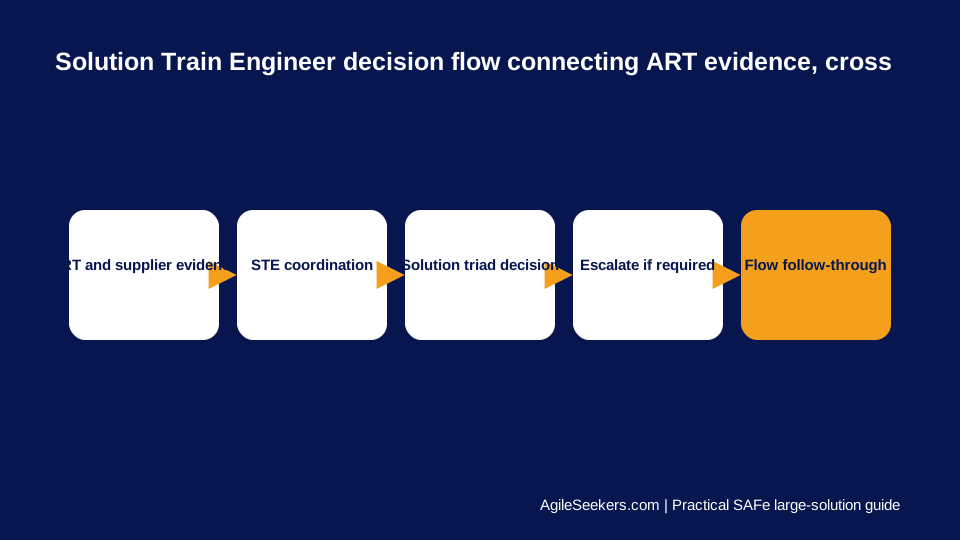
The STE coordinates the system; the STE does not own every decision
The Solution Train Engineer is a servant leader and coach who facilitates Solution Train events and processes, coordinates ARTs and suppliers, and supports delivery of value. Solution Management defines large-solution value and backlog direction; Solution Architects define shared technical vision; RTEs coordinate their ARTs. The STE helps these accountabilities interact without becoming a super-project manager.
A practical decision-rights map
| Decision | Primary accountability | STE contribution |
|---|---|---|
| Capability priority and scope | Solution Management | Expose flow, capacity and dependency evidence |
| Architecture and NFR direction | Solution Architect or Engineering | Facilitate cross-ART options and integration evidence |
| ART execution choice | ART and RTE within guardrails | Avoid unnecessary centralization |
| Supplier coordination | Contract and solution owners | Align cadence, risks, evidence and escalation |
| Systemic impediment | Appropriate organizational authority | Frame impact, options and needed-by date |
Design events around changed evidence
Pre-Plan aligns capabilities, dependencies and ART readiness. Solution Train Sync addresses exceptions, flow and decisions during execution. Solution Demo evaluates integrated behavior across ARTs and suppliers. Inspect and Adapt examines outcomes and systemic constraints. The STE should remove agenda items that merely repeat lower-level status.
Escalate without taking ownership away
- Name the affected capability, outcome or solution risk.
- Show current evidence, options and consequences.
- Identify the authority required and deadline.
- Keep local action moving inside existing guardrails.
- Return the decision and reasoning to affected ARTs.
STE effectiveness signals
- Cross-ART decision and dependency age.
- Capability flow and integrated evidence frequency.
- Supplier and ART readiness before planning.
- Systemic impediments resolved at the correct level.
- RTE autonomy and collaboration quality.
SAFe RTE training provides the closest train-level facilitation learning path. Leading SAFe certification training develops the systems and leadership context for large-solution coordination.
The role succeeds when the Solution Train can make timely decisions and produce integrated evidence without routing every issue through one person. A permanently overloaded STE is a signal that decision rights, event design, or organizational boundaries need attention.
Worked boundary: a supplier interface slips
Two ARTs depend on a supplier interface whose evidence will arrive after their needed-by date. The STE makes the cross-train impact visible and brings RTEs, the supplier, Solution Management, and architecture into one decision. Solution Management decides the capability trade-off; architecture decides compatibility boundaries; the contract owner addresses the supplier commitment. The STE records the outcome and follows flow without pretending to own all four decisions.
A 30-day STE operating-system review
- Map recurring decisions and where they wait.
- Clarify local, triad, supplier, and leadership authority.
- Remove duplicate status from Solution Train events.
- Set ageing thresholds for capabilities and impediments.
- Review whether integrated evidence and decision time improve.
Watch for the opposite failure: an STE who facilitates meetings but cannot access decision owners. Servant leadership does not mean powerless coordination. The organization must provide timely escalation paths and active portfolio support for systemic constraints that ARTs and suppliers cannot resolve within established guardrails.
Review the role boundary with the Solution Train triad after each PI.