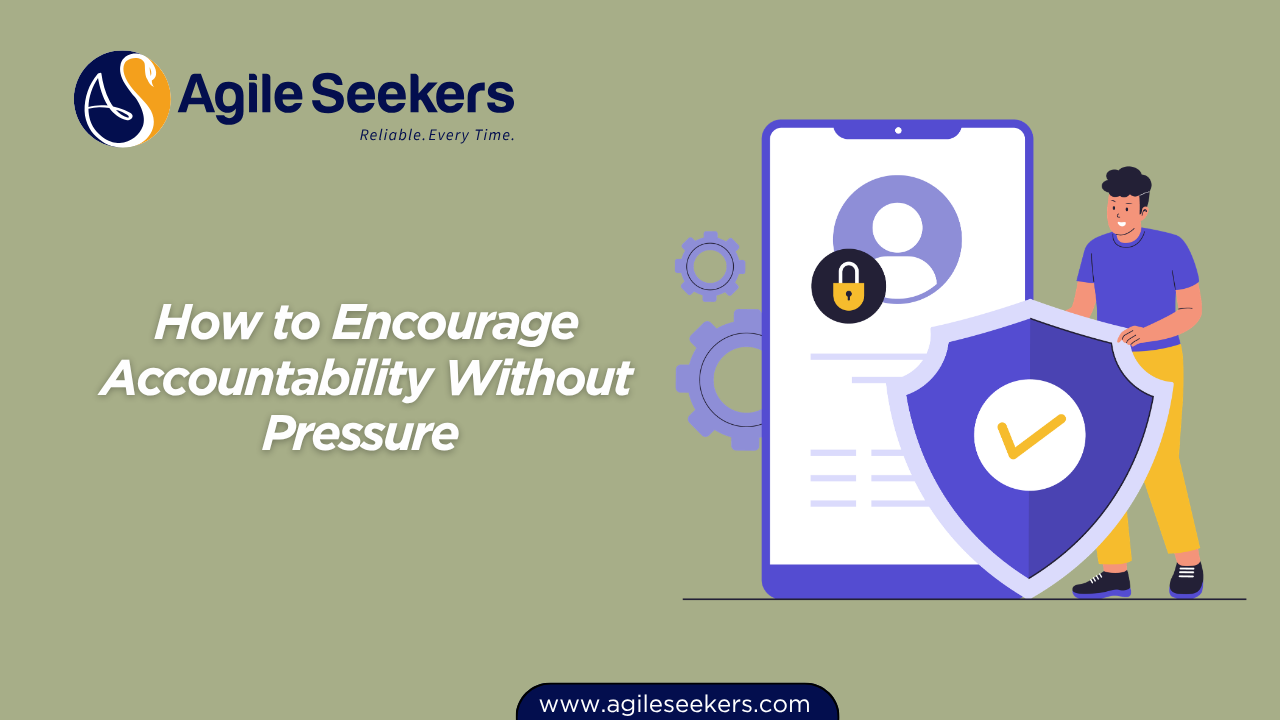
Accountability often gets confused with pressure. Many teams believe that if people are not pushed, reminded, or chased, work will not get done. That belief creates environments where accountability feels heavy, forced, and uncomfortable.
Here’s the truth: pressure might drive short-term output, but it slowly kills ownership. People start working to avoid blame instead of working to create value.
Real accountability looks different. It feels lighter, clearer, and more self-driven. When done right, teams don’t need constant follow-ups. They step up because they want to, not because they have to.
Let’s break down how to build that kind of accountability.
Why Pressure Fails in the Long Run
Pressure works like a temporary boost. Deadlines get met. Tasks get completed. But something shifts beneath the surface.
People stop taking initiative. They wait for instructions. They avoid risks. They hide problems until the last minute.
This happens because pressure creates fear. And fear reduces ownership.
Instead of asking “How can I improve this?”, team members start thinking “How do I avoid getting questioned?”
That mindset shift is dangerous. It slows down learning, reduces innovation, and creates dependency on managers or Scrum Masters.
If you want sustainable performance, you need to replace pressure with clarity and trust.
What Accountability Actually Means
Accountability is not about control. It is about ownership.
When someone is accountable, they:
- Understand what they are responsible for
- Care about the outcome, not just the task
- Take initiative without being told
- Speak up when things go wrong
This kind of behavior doesn’t come from pressure. It comes from an environment that supports ownership.
Frameworks like the Scrum Guide emphasize self-managing teams for this exact reason. Teams perform better when they take responsibility for their work instead of being directed constantly.
Start With Clarity, Not Control
Most accountability problems are actually clarity problems.
If people don’t know what success looks like, they will struggle to take ownership.
Clear expectations remove the need for pressure.
Focus on:
- Clear sprint goals
- Defined outcomes, not vague tasks
- Transparent priorities
- Visible progress
When teams understand the “why” behind their work, they naturally take responsibility for the “how”.
This is a core principle taught in SAFe certification, where alignment across teams reduces the need for constant follow-ups.
Shift From Task Ownership to Outcome Ownership
Here’s where many teams get stuck.
They assign tasks and expect accountability. But tasks don’t create ownership. Outcomes do.
If someone owns a task, they focus on finishing it.
If someone owns an outcome, they focus on making it work.
That difference changes everything.
Instead of saying:
“Complete this feature.”
Say:
“Make sure this feature improves user engagement by 10%.”
Now the person has a reason to care. They are not just delivering work; they are delivering impact.
This mindset is deeply embedded in SAFe Product Owner and Manager Certification, where value delivery drives decisions, not just backlog completion.
Make Work Visible
People take accountability when they can see their work clearly.
Hidden work leads to hidden problems.
Visible work creates natural responsibility.
Use simple practices:
- Keep boards updated
- Limit work in progress
- Highlight blockers early
- Track flow, not just completion
When work is visible, accountability becomes shared. The team starts noticing delays and helping each other without needing external pressure.
Tools like Kanban boards and flow metrics are widely recommended by Atlassian’s Agile practices to improve transparency and ownership.
Encourage Safe Conversations
Accountability cannot exist without psychological safety.
If people feel judged, they will hide mistakes. If they feel safe, they will raise issues early.
And early visibility is what keeps projects on track.
Create an environment where:
- Raising risks is appreciated
- Mistakes are treated as learning opportunities
- Questions are welcomed
- Blame is avoided
This doesn’t mean lowering standards. It means removing fear so people can meet those standards honestly.
Strong facilitation skills from SAFe Scrum Master certification help build this environment within teams.
Use Questions Instead of Commands
Pressure often shows up as instructions.
“Why is this not done?”
“When will you finish this?”
These questions feel like pressure because they focus on delay and blame.
Shift the conversation.
Ask:
- “What’s blocking progress?”
- “How can we move this forward?”
- “What support do you need?”
This approach changes the dynamic. It shows that you care about progress, not just deadlines.
People respond better when they feel supported, not monitored.
Define Ownership Clearly
Ambiguity kills accountability.
If multiple people think someone else owns something, it won’t get done.
Every piece of work should have a clear owner. Not a group. Not a shared responsibility. One accountable person.
This doesn’t mean working alone. It means being responsible for the outcome.
Clear ownership reduces confusion and removes the need for repeated follow-ups.
Advanced coaching techniques taught in SAFe Advanced Scrum Master certification training help teams establish this clarity effectively.
Focus on Progress, Not Perfection
Pressure often comes from unrealistic expectations.
When teams feel they must deliver perfectly every time, they become cautious and slow.
Encourage progress instead.
Celebrate small wins. Recognize improvements. Highlight movement, not just completion.
This keeps momentum high and reduces the fear of failure.
Over time, consistent progress leads to better outcomes than forced perfection.
Build Accountability Into the System
Don’t rely on individuals alone. Design your system to support accountability.
That means:
- Short feedback cycles
- Frequent demos
- Regular retrospectives
- Clear metrics
When teams review their work regularly, they naturally take responsibility for improving it.
For example, using flow metrics like cycle time and throughput can highlight delays without blaming individuals. The focus stays on the system, not the person.
Guidance from Scaled Agile Framework (SAFe) supports this approach by emphasizing system-level thinking.
Teams trained through SAFe Release Train Engineer certification training learn how to create these systems across multiple teams.
Lead by Example
Accountability starts at the top.
If leaders avoid responsibility, teams will do the same.
If leaders own their decisions, admit mistakes, and follow through on commitments, teams will mirror that behavior.
Simple actions matter:
- Admit when you are wrong
- Follow through on promises
- Show up prepared
- Respect team commitments
People don’t listen to what you say about accountability. They watch how you behave.
Avoid Overloading the Team
Here’s something most teams ignore.
When people are overloaded, accountability drops.
Not because they don’t care. Because they can’t keep up.
Too much work creates stress. Stress reduces ownership. People start prioritizing survival over quality.
Limit work in progress. Focus on fewer priorities. Finish what you start.
When teams feel in control of their workload, they take more responsibility for delivering it well.
Recognize Ownership Publicly
Accountability grows when it gets noticed.
When someone takes ownership, call it out.
Not in a formal, forced way. Just simple recognition.
“That was handled really well.”
“Great job taking initiative on that blocker.”
This reinforces the behavior you want to see.
Over time, it creates a culture where ownership becomes the norm.
Keep Feedback Continuous
Waiting until retrospectives to talk about accountability is too late.
Feedback should happen in real time.
Short, direct conversations work best.
Keep it simple:
- What’s working?
- What needs improvement?
- What’s the next step?
This keeps everyone aligned without creating pressure.
Final Thoughts
Accountability is not something you enforce. It’s something you enable.
When teams have clarity, ownership, visibility, and trust, accountability becomes natural.
You don’t need to chase people. You don’t need to apply pressure.
The system does the work for you.
Start small. Fix clarity. Improve visibility. Encourage open conversations.
Over time, you’ll notice a shift.
People stop waiting to be told what to do.
They start owning what needs to be done.
That’s when accountability truly works.
Also read - Why Some Teams Avoid Raising Risks Early
Also see - How to Use AI to Identify Patterns in Failed Features
A practical sequence to apply this guidance
- Why Pressure Fails in the Long Run: Clarify the decision, people affected and evidence needed before acting.
- What Accountability Actually Means: Apply the guidance to one current example and record important constraints.
- Start With Clarity, Not Control: Choose one small action with an owner, boundary and review date.
- Shift From Task Ownership to Outcome Ownership: Compare the result with the intended outcome and update the approach.
Use the sequence as a decision aid, not a rigid template. Preserve the article's context and adapt the steps when evidence, risk or authority differs.