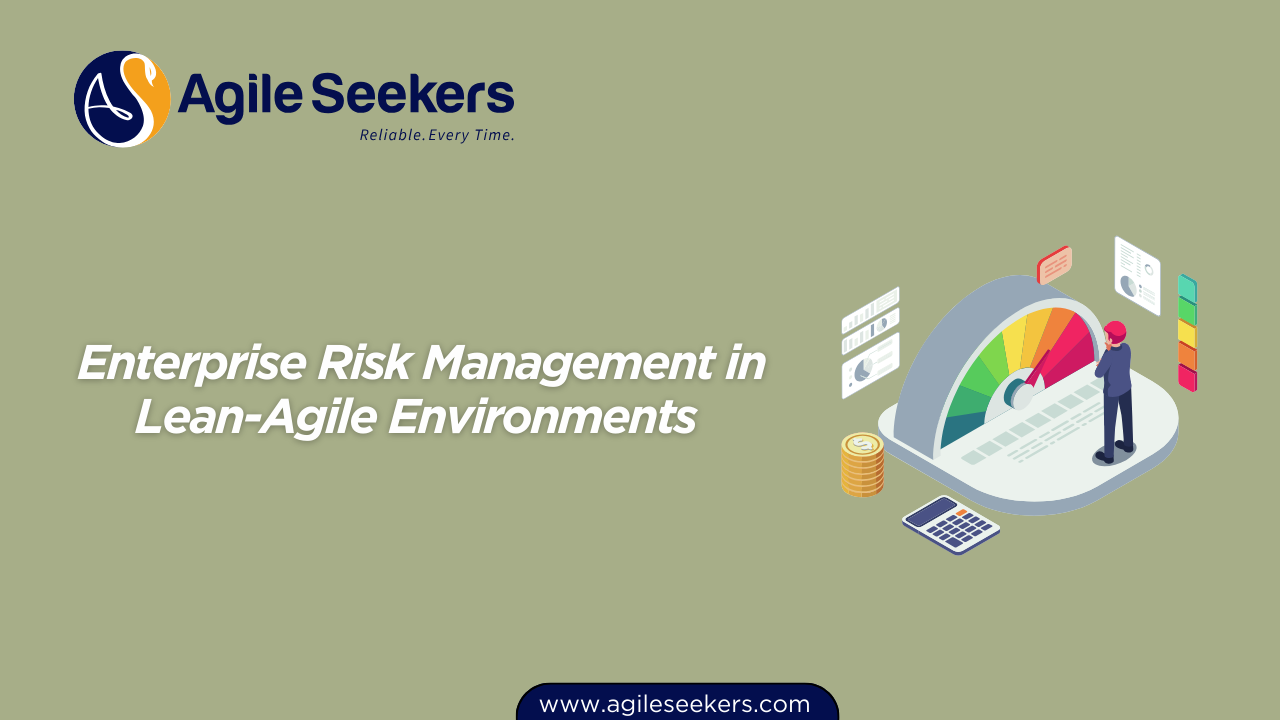
Enterprise Risk Management often gets treated like a compliance exercise. Spreadsheets, quarterly reviews, heat maps that look good in board decks but change very little on the ground. Lean-Agile environments expose this weakness fast. When teams deliver frequently, dependencies shift weekly, and strategy evolves every quarter, static risk models fall apart.
What this really means is simple: risk management must move at the same speed as delivery. Lean-Agile does not remove risk. It makes risk visible earlier and forces better decisions sooner.
This article breaks down how Enterprise Risk Management actually works in Lean-Agile environments, how it connects to SAFe roles and practices, and how leaders can stop treating risk as an afterthought.
Why Traditional ERM Struggles in Agile Organizations
Most traditional ERM approaches assume predictability. Risks get identified annually, assessed based on historical data, and mitigated through long approval cycles. That model made sense when delivery cycles ran for months or years.
Lean-Agile environments operate differently:
- Work flows continuously instead of moving in big phases
- Decisions happen closer to the teams doing the work
- Strategy adapts based on fast feedback, not fixed plans
When risk governance stays centralized and slow, teams either ignore it or work around it. Neither outcome helps the enterprise.
Lean-Agile requires risk management to shift from control to enablement.
Reframing Risk in Lean-Agile Systems
In Lean-Agile, risk is not a separate activity. It is embedded in how work gets prioritized, delivered, and reviewed.
Instead of asking “What could go wrong this year?”, Agile organizations ask:
- What risks are emerging right now?
- Where do we see early signals of trouble?
- What options do we have before the risk becomes expensive?
This mindset aligns closely with the principles taught in the Leading SAFe agilist certification, where leaders learn to decentralize decision-making while keeping economic and risk boundaries clear.
Types of Risks That Matter Most in Lean-Agile Enterprises
Not all risks deserve equal attention. Lean-Agile environments focus on risks that directly affect flow, value, and trust.
Strategic Risk
This includes risks related to poor portfolio choices, misaligned investments, or betting too heavily on assumptions that no longer hold. Lean Portfolio Management reduces strategic risk by funding value streams instead of projects and reviewing outcomes frequently.
SAFe explains this shift clearly on the Lean Portfolio Management page, where strategy and execution stay connected through continuous feedback.
Delivery and Execution Risk
Execution risk shows up as missed commitments, unstable velocity, or fragile architectures. Teams surface these risks through flow metrics, dependency mapping, and regular Inspect & Adapt events.
Scrum Masters trained through the SAFe Scrum Master certification play a critical role here by making impediments visible and ensuring risks are addressed, not hidden.
Technical and Architectural Risk
Legacy systems, poor test coverage, and growing technical debt silently increase enterprise risk. Lean-Agile environments tackle this by integrating architectural runway planning and continuous refactoring into normal delivery.
Release Train Engineers, especially those trained through the SAFe Release Train Engineer certification, help surface cross-team technical risks early and coordinate mitigation across the ART.
Compliance and Regulatory Risk
Highly regulated industries often assume Agile increases compliance risk. In practice, frequent reviews, built-in quality, and automated evidence generation reduce it.
Continuous compliance is far more effective than late-stage audits.
Risk Ownership Moves Closer to the Work
One of the biggest shifts in Lean-Agile ERM is ownership. Risks no longer sit only with a central risk office. They become shared responsibilities.
- Teams own delivery and technical risks
- Product Management owns market and customer risks
- Leadership owns strategic and investment risks
This distributed ownership does not mean chaos. It works because decision boundaries stay clear.
Product Owners trained through the SAFe Product Owner Product Manager (POPM) certification learn how to balance customer value with economic and risk considerations at the backlog level.
Using Flow Metrics as Leading Risk Indicators
Lean-Agile organizations rely on flow metrics not just for performance, but for risk detection.
- Rising lead time signals hidden dependencies or quality issues
- Increasing work in progress highlights overcommitment
- Low predictability points to planning or systemic problems
These signals appear weeks or months before traditional risk reports would flag a problem.
The Scaled Agile Framework highlights the importance of flow metrics in managing uncertainty on its metrics guidance page.
Risk and PI Planning Go Hand in Hand
PI Planning is one of the most powerful risk management events in SAFe. It forces teams to:
- Expose dependencies
- Surface assumptions
- Discuss capacity constraints
Program Risks identified during PI Planning are not theoretical. They come directly from the people doing the work.
Advanced Scrum Masters trained through the SAFe Advanced Scrum Master certification help teams move beyond listing risks and into meaningful mitigation conversations.
Lean Governance Without Slowing Teams Down
Governance often gets blamed for slowing Agile teams. The real issue is how governance is designed.
Lean governance focuses on:
- Clear policies instead of case-by-case approvals
- Guardrails instead of detailed instructions
- Transparency instead of control
When teams understand boundaries, they move faster and take smarter risks.
Culture Plays a Bigger Role Than Any Framework
No risk framework works without the right culture. Lean-Agile environments depend on psychological safety.
If teams fear blame, risks stay hidden. If leaders reward early escalation, risks get addressed while they are still cheap.
Enterprise Risk Management succeeds when leaders ask better questions, not when they demand perfect forecasts.
Connecting ERM to Business Agility
Business agility does not mean avoiding risk. It means responding to risk faster than competitors.
Organizations that integrate ERM into Lean-Agile practices gain:
- Earlier visibility into strategic threats
- Lower cost of failure through fast feedback
- Higher trust between teams and leadership
This connection between risk and agility sits at the heart of SAFe and is reinforced across roles, from Scrum Masters to Release Train Engineers.
Common Mistakes to Avoid
- Treating risk reviews as separate meetings
- Measuring risk only with lagging indicators
- Centralizing decisions that teams are closer to
- Ignoring cultural barriers to transparency
Lean-Agile ERM works when risk conversations happen daily, not quarterly.
Final Thoughts
Enterprise Risk Management in Lean-Agile environments is not about eliminating uncertainty. It is about creating systems that learn faster than risk can grow.
When risk management aligns with flow, transparency, and decentralized decision-making, it becomes a competitive advantage rather than a constraint.
Organizations that embrace this shift stop reacting to surprises and start shaping outcomes intentionally.
Also read - Using OKRs at Portfolio Level Without Creating Chaos
Also see - Why Strategy Execution Fails in Non-Agile Enterprises (and How SAFe Fixes It)