Portfolio decisions shape everything that happens downstream. Which initiatives get funding. Which ideas wait. Which teams stay overloaded while others sit idle. A Portfolio Kanban system exists to bring discipline, visibility, and flow to those decisions. When designed well, it becomes a thinking tool, not just a board on a wall.
This article breaks down how to design a Portfolio Kanban system that actually works. Not a theoretical model. A practical system that creates clarity, exposes constraints, and helps leaders make better choices without micromanaging delivery teams.
What Portfolio Kanban Is Really Meant to Do
Portfolio Kanban is not about tracking projects. It is about managing the flow of strategic work from idea to outcome. The focus stays on decision-making, not execution detail.
A well-designed Portfolio Kanban helps organizations:
- Visualize all strategic initiatives in one place
- Limit overcommitment at the portfolio level
- Reduce delays caused by unclear approvals
- Align funding decisions with real capacity
- Shift conversations from opinions to evidence
In SAFe environments, Portfolio Kanban sits at the intersection of strategy, funding, and execution. Leaders trained through SAFe agilist certification often discover that Portfolio Kanban is where lean thinking becomes visible and practical.
Start With the Right Design Mindset
Before drawing columns, start with intent. Many Portfolio Kanban systems fail because they copy examples without understanding context.
Ask three simple questions first:
- Who uses this system to make decisions?
- What decisions must it support?
- What level of detail helps, and what creates noise?
Portfolio Kanban should serve executives, portfolio managers, enterprise architects, and lean governance roles. It should not turn into a detailed project tracker. That responsibility belongs closer to ARTs and teams.
Defining the Core Portfolio Kanban States
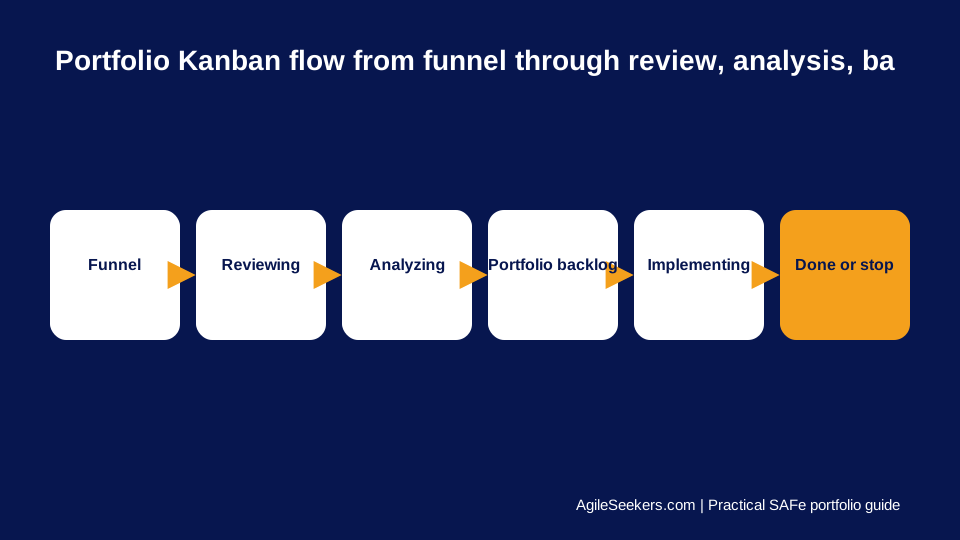
Every Portfolio Kanban system uses states to represent how work flows. The exact names matter less than the intent behind them. Each state should answer one question: what decision or activity happens here?
Funnel
This is the raw intake. Ideas, opportunities, regulatory needs, and strategic bets enter here. No analysis. No prioritization. Just visibility.
Good practice: keep this column wide open but review it frequently. If ideas pile up and never move, you have a discovery bottleneck.
Reviewing
Here, leaders decide whether an idea deserves deeper exploration. This is a lightweight filter, not a business case review.
Questions answered here:
- Is this aligned with strategy?
- Is it large enough to matter?
- Is there a clear business owner?
Analyzing
This is where Portfolio Kanban often breaks down. Teams overanalyze. Leaders request excessive documentation. Flow slows.
Analysis should focus on:
- Expected outcomes, not detailed solutions
- Rough cost of delay
- Key risks and dependencies
Product and solution thinking matters here. Professionals with a SAFe Product Owner Product Manager certification often play a critical role in shaping this analysis without turning it into upfront design.
Portfolio Backlog
This is the commitment point. Items here are approved, prioritized, and ready for implementation when capacity becomes available.
Nothing should enter this column without a clear economic rationale and an identified ART or value stream.
Implementing
Once initiatives move into implementation, Portfolio Kanban stops managing tasks. It manages visibility and flow.
At this stage, collaboration with RTEs and Scrum Masters becomes essential. Those with SAFe Release Train Engineer certification help ensure portfolio priorities translate into realistic delivery plans.
Done
Done does not mean deployed. It means value realized or learning captured. If an initiative ends early because assumptions failed, that still counts as success.
Using WIP Limits to Protect Flow
WIP limits are the heartbeat of Portfolio Kanban. Without them, the board becomes a visual wishlist.
Effective WIP limits:
- Force prioritization conversations
- Expose decision bottlenecks
- Prevent analysis overload
Start conservative. For example, limit the Analyzing column to three or four initiatives. When leaders push for more, ask which current item should pause.
This discipline often challenges existing behaviors. Scrum Masters trained through SAFe Scrum Master certification frequently support these conversations by making flow constraints visible across levels.
Explicit Policies Make the System Trustworthy
A column without policies invites debate. A column with clear entry and exit rules creates confidence.
Examples of explicit policies:
- What information is required to move from Reviewing to Analyzing
- Who approves movement into the Portfolio Backlog
- What evidence defines “Done”
These policies should be visible near the board. They reduce political escalation and speed up decisions.
Design for Economic Prioritization
Portfolio Kanban works best when prioritization uses economics, not opinion. Cost of Delay, WSJF, and hypothesis-driven funding bring objectivity into the system.
Do not turn this into a math exercise. Use numbers to inform discussion, not replace judgment.
Scaled Agile’s guidance on Portfolio Kanban provides useful reference models that many organizations adapt successfully. You can explore their perspective on Lean Portfolio Management and Kanban flow on the Scaled Agile website.
Connecting Portfolio Kanban to ART Execution
Portfolio Kanban should never operate in isolation. Its real power shows when it connects cleanly with ART planning and execution.
Key integration points include:
- Feeding prioritized initiatives into PI Planning
- Aligning portfolio priorities with ART capacity
- Reviewing progress during Inspect and Adapt
Advanced Scrum Masters often act as flow stewards across this boundary. Training such as SAFe Advanced Scrum Master certification deepens the ability to spot systemic flow issues early.
Common Design Mistakes to Avoid
Even experienced organizations stumble when designing Portfolio Kanban systems.
Too Many Columns
More columns do not mean more clarity. Each additional state increases handoffs and delays.
No Real WIP Limits
If limits exist but never enforced, the system loses credibility.
Turning It Into Status Reporting
Portfolio Kanban is for decision-making. Status belongs in execution-level tools.
Ignoring Feedback Loops
Regular reviews of flow metrics such as lead time and throughput help evolve the system.
Using Metrics Without Killing Flow
Metrics should serve learning. At the portfolio level, focus on:
- Average time in each state
- Queue length before key decisions
- Percentage of initiatives abandoned early
These indicators reveal whether strategy flows or stalls.
Evolving the System Over Time
Portfolio Kanban is not a one-time design. It evolves as strategy, structure, and maturity change.
Review it quarterly. Ask:
- Where do items wait the longest?
- Which decisions cause friction?
- What information do leaders still ask for offline?
Small adjustments often unlock significant flow improvements.
Why Portfolio Kanban Is a Leadership Practice
Tools do not create flow. Leadership behavior does. Portfolio Kanban makes those behaviors visible.
When leaders respect WIP limits, prioritize transparently, and accept learning over certainty, the system grows. When they bypass it, flow collapses.
This is why Portfolio Kanban often becomes a turning point in lean transformations. It exposes reality without blame.
Final Thoughts
Designing a Portfolio Kanban system is an exercise in clarity. Clarity of intent. Clarity of decision rights. Clarity of flow.
Done well, it replaces reactive prioritization with deliberate choices. It aligns strategy with execution without adding layers of control.
If your organization struggles with too many initiatives, slow decisions, or unclear priorities, Portfolio Kanban is not a silver bullet. But it is a powerful place to start asking better questions and seeing the system as it really is.
Also read - How Leaders Can Use AI to Strengthen Lean-Portfolio Decision-Making
Also see - Using OKRs at Portfolio Level Without Creating Chaos
The board should constrain demand
Portfolio Kanban visualizes and manages epic flow from idea through analysis and implementation. Its value comes from limiting work, making decision states explicit, and removing weak options. A digital board containing hundreds of initiatives without WIP or exit policies is an inventory report, not a flow system.
Write policies around decisions
| State | Decision | Minimum useful evidence |
|---|---|---|
| Funnel | Is the idea worth review attention? | Problem, strategic relevance and owner |
| Reviewing | Should discovery capacity be used? | Affected value stream, urgency and alternatives |
| Analyzing | Is an MVP or implementation justified? | Hypothesis, economics, NFRs and leading indicators |
| Backlog | Is it the best available option now? | Priority, capacity and dependency context |
| Implementing | Persevere, pivot or stop? | MVP and outcome evidence |
Use ageing with WIP
WIP limits prevent starting more analysis than portfolio leaders can decide. Ageing exposes items that occupy capacity without learning. A threshold should trigger a named response: supply missing evidence, split the epic, change the owner, escalate a decision, or remove it. Moving a card to a waiting column does not remove its economic cost.
Portfolio flow review
- Age by state and time since last evidence.
- Arrival and finish rate for epics.
- Items stopped before full implementation.
- Decision latency and repeated reversals.
- Capacity consumed by analysis versus validated learning.
Leading SAFe certification training supports portfolio strategy and Kanban decisions. SAFe POPM training helps product roles connect epic intent to feature and ART backlog evidence.