Portfolio leaders deal with one core challenge every quarter: how to invest responsibly without slowing teams down or spreading the budget too thin. Everyone talks about strategy, but for allocating money, time, and people, decisions often shift from strategic conversations to political negotiations. That’s where Lean Budget Guardrails step in.
Guardrails bring clarity to investment decisions, keep the portfolio aligned with the organization’s goals, and nudge leaders to focus on value instead of personal preferences or the loudest stakeholder in the room.
This guide breaks down how guardrails actually influence decisions in SAFe, why they prevent portfolio drift, and how to use them with confidence.
What Guardrails Actually Solve
Here’s the thing: most organizations don’t suffer because they lack ideas. They suffer because they keep funding everything that sounds good. Teams get pulled into work that doesn’t connect to outcomes. Leaders assume money equals progress. And before long, no one can explain why half the initiatives even exist.
Lean Budget Guardrails create a shared language for choosing what gets funded and why. They act as the boundaries within which decentralised decision-making can safely happen. Instead of forcing every approval through a central authority, guardrails make it possible for Agile Release Trains (ARTs) and value stream leaders to make choices locally while still protecting the strategic intent of the portfolio.
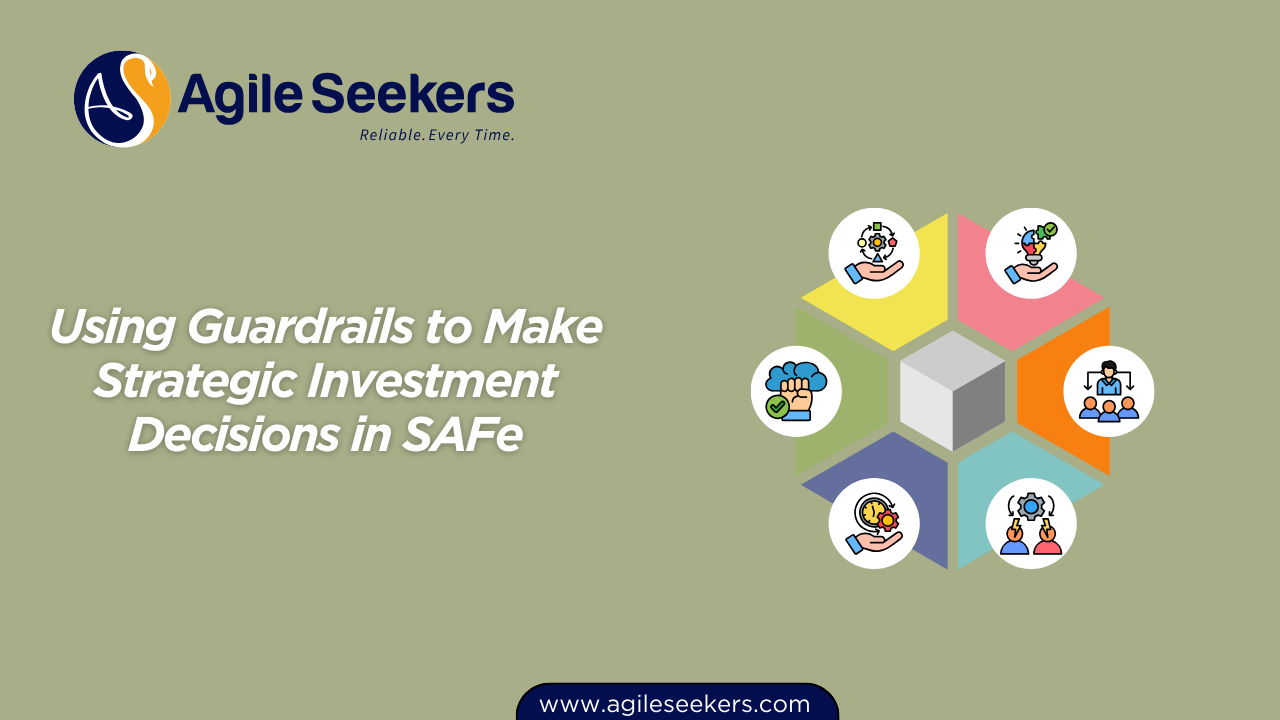
The Four SAFe Lean Budget Guardrails
1. Guide Investments by Horizon
If the entire portfolio invests only in core products, innovation eventually dries up. If leaders chase innovations without maintaining the core, revenue sinks. This guardrail forces a balanced spread across three horizons:
- Horizon 1: Strengthen and scale proven offerings
- Horizon 2: Extend into adjacent opportunities
- Horizon 3: Explore strategic bets and long-term possibilities
A good portfolio review often reveals imbalance. Teams may be overwhelmed with short-term demands, while innovation initiatives are underfunded or left to informal efforts. This guardrail prevents that trap.
Leaders trained in SAFe certification deepen their understanding of why horizon balancing matters, especially during Portfolio Syncs and budget reshuffles.
2. Apply Capacity Allocation
Capacity allocation decides how much effort the ART should dedicate to different types of work. If an ART dedicates 100 percent of its energy to new features, technical debt quietly grows until it becomes a real threat. If too much goes into enablers, teams may struggle to deliver customer value.
This guardrail pushes leaders and teams to agree on an allocation split during PI Planning. It's not about strict enforcement but about alignment. Teams know exactly how much room they have for innovation spikes, architectural runway, maintenance, or compliance.
POPMs play a huge role here. Their ability to negotiate, prioritise, and defend allocation decisions is crucial. Anyone preparing for this role can benefit from the SAFe POPM certification, which dives deep into value flow and economic decision-making.
3. Approve Significant Initiatives
Not every idea deserves a green light. Some initiatives are too expensive, too risky, or too detached from the vision. The approval guardrail ensures that only initiatives crossing specific thresholds require higher-level review. Everything else can be delegated.
This avoids micromanagement while still protecting the portfolio from financial mistakes.
External guidance from frameworks like the official SAFe Lean Portfolio Management content also supports this guardrail. The Scaled Agile Framework outlines how epic hypothesis statements, WSJF, and portfolio Kanban contribute to transparent decision-making.
4. Continuous Business Owner Engagement
This guardrail stops leaders from disappearing after approving initiatives. Business owners remain involved, track value delivery, understand impediments, and course-correct when needed.
If leaders walk away after signing the budget, teams drift from outcomes. If they interfere too much, teams lose autonomy. The right level of engagement sustains alignment.
Scrum Masters help keep these interactions healthy. If you're coaching ART teams, the SAFe Scrum Master certification offers practical guidance.
How These Guardrails Shape Strategic Investment
1. Decisions Become More Predictable
Instead of asking whether something should be approved, leaders ask whether it fits within the guardrails. That shift reduces random variance and makes work flow more smoothly.
2. Teams Reduce Waste and Rework
Without guardrails, teams often start work that later gets deprioritized. Guardrails ensure alignment early and prevent:
- Hidden projects
- Unfunded mandates
- Initiatives lacking measurable outcomes
3. Strategy Becomes Visible
Guardrails force leaders to express strategy as investment choices, not slogans. When budgets match strategic goals, teams finally understand the true priorities.
4. Faster Decisions With Less Drama
Because the criteria are clear, conversations shift from personal opinions to principle-based decisions.
Putting Guardrails Into Action: A Practical Flow
Step 1: Review Your Horizon Mix
Look at your portfolio Kanban and check the spread across horizons. If Horizon 3 is empty, you're playing too safe. If Horizon 1 is starving, you're risking the stability of your core offerings.
Step 2: Revisit Capacity Allocation With ARTs
ART leaders and Product Management align on the split between new features, enablers, tech debt, and compliance. This alignment should happen before PI Planning.
For RTEs facilitating these conversations, the SAFe Release Train Engineer certification offers strong frameworks.
Step 3: Check Which Initiatives Need Approval
Review threshold levels. Only escalate work that genuinely meets significance criteria.
Step 4: Confirm Continuous Engagement From Business Owners
Business owners should stay connected through the PI, not just at PI Planning.
Coaches and senior Scrum Masters who influence these interactions can strengthen their leadership toolkit through the SAFe Advanced Scrum Master certification.
How Guardrails Support Decentralized Decisions
A frequent fear among leaders is losing control when decisions get decentralized. Guardrails eliminate that fear by clarifying:
- Which decisions stay centralized
- Which decisions ARTs can make independently
- What boundaries protect responsible autonomy
Teams gain freedom without risking alignment, and leaders retain visibility without micromanaging.
Using Metrics to Strengthen Investment Choices
Guardrails work best when backed by evidence. Metrics that complement guardrail decisions include:
- Flow load
- Flow velocity
- Flow time
- Flow distribution
- Cost of delay
- Epic success criteria
The Scaled Agile Framework’s sections on Flow Metrics provide helpful reference material for applying these concepts effectively.
How Guardrails Prevent Strategic Drift
Strategic drift occurs when the budget no longer matches strategy. It often shows up as:
- Overfunding short-term work
- Underinvesting in long-term bets
- Initiatives that don’t tie to outcomes
Guardrails push leaders to ask tough but necessary questions about alignment, risk, and value.
When Guardrails Reveal Hard Truths
Sometimes guardrails expose uncomfortable insights:
- The roadmap is overloaded
- Tech debt has reached risky levels
- Too many initiatives lack measurable goals
- The budget is spread too thin to produce meaningful outcomes
The earlier these truths surface, the easier it becomes to course-correct.
How Guardrails Strengthen Lean Governance
Lean governance isn’t about controlling people. It’s about managing risk responsibly. Guardrails enable this by creating clarity, boundaries, and a value-focused decision environment.
Final Thoughts: Guardrails Bring Clarity, Not Constraints
Guardrails don’t restrict creativity. They protect it. They help ensure that time, talent, and investment flow toward outcomes that support the organization’s strategy. They prevent teams from drifting, reduce waste, and create a more confident decision-making culture.
If you want to deepen your understanding of how portfolio decisions influence execution, consider strengthening your foundation through:
- SAFe agile certification
- SAFe Scrum Master certification
- SAFe POPM certification
- SAFe Advanced Scrum Master certification
- SAFe Release Train Engineer certification
Guardrails won’t make decisions for you. But they make the right decisions easier to see.
Also read - How Guardrails Keep Your Lean Portfolio Investments On Track
Also see - How Solution Architects Enable Flow in Large SAFe Implementations