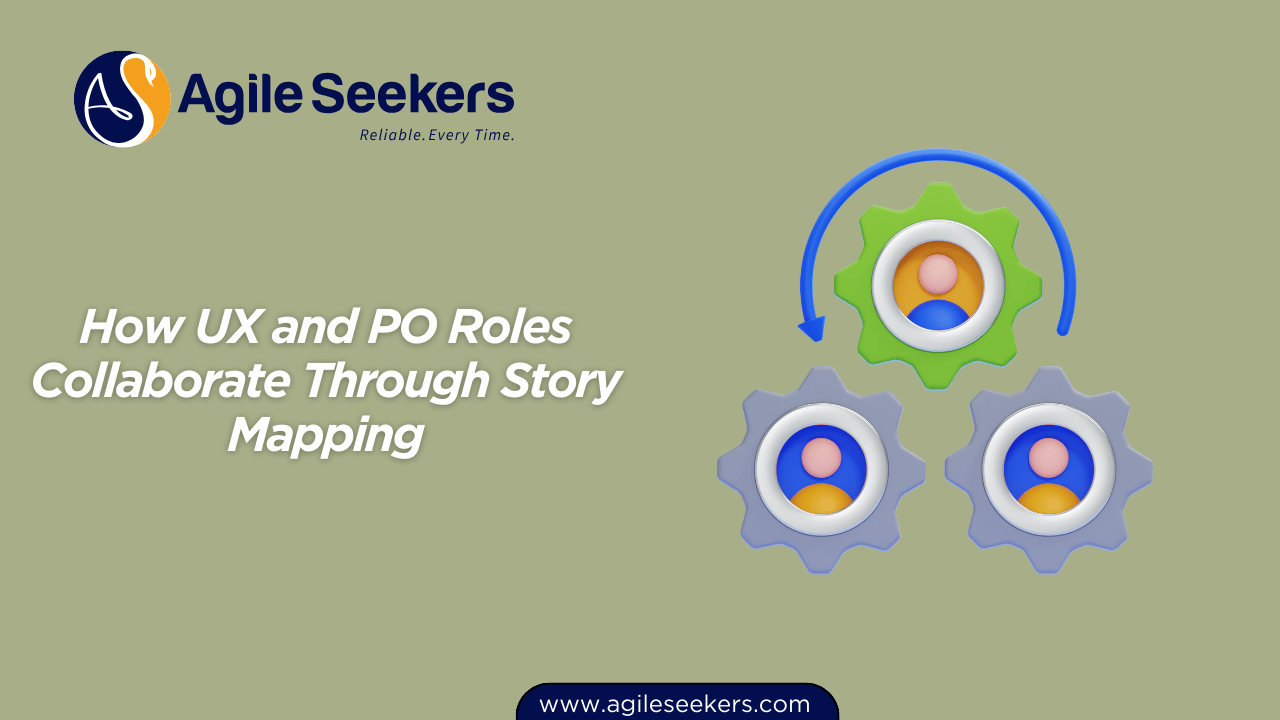
When UX designers and Product Owners decide to build a product together, things move faster, clearer, and with far fewer assumptions. Story mapping becomes their shared canvas. Not just for outlining features, but for understanding how users think, feel, and move through the experience. What this really means is that both roles finally get a way to sync around user value, not just requirements.
This post breaks down how UX and PO roles work together through story mapping, why the partnership matters, and how you can strengthen this collaboration inside your Agile teams.
Why UX and PO Alignment Matters Before Story Mapping Starts
A good story map doesn’t start with sticky notes. It starts with a joint understanding of the customer problem. UX arrives with user behavior patterns, research insights, and pain points. POs come in with market signals, business goals, and delivery constraints. When these perspectives combine early, the team avoids rework and fragmented product thinking.
The PO sets direction: what problem matters most and why now. UX validates that direction: how the user experiences it and how real those needs are. This pairing lays the foundation for a meaningful mapping session where both value and usability guide decisions.
If you want to build deeper product thinking as a PO, explore structured training such as SAFe POPM certification, which strengthens prioritization and customer-centric decision making.
What Story Mapping Solves for UX and PO Roles
Story mapping reduces the tug-of-war between what users want and what the business must deliver. It reveals user flow, dependencies, and the natural sequencing of value.
- For UX: It becomes easier to highlight friction points and ensure design logic isn’t lost during development.
- For POs: It clarifies release slices, scope boundaries, and how to plan the backlog without losing context.
Both roles get a shared understanding of what matters, which reduces debates later in refinement or sprint planning.
Step-by-Step: How UX and POs Collaborate Throughout Story Mapping
1. Align on the user goal before mapping begins
If the starting point is vague, the map falls apart. UX brings user personas, journey insights, and pain points. The PO balances that with business priorities, expected outcomes, and release timelines. Together, they decide which user goal will anchor the map.
This moment of alignment is where many teams go off track. Getting it right sets the narrative for the entire workshop. You’ll see this principle emphasized in strategic programs like Leading SAFe training, where clarity of purpose guides planning and execution.
2. Map the high-level activities together
These are the major steps the user takes to reach their objective. UX focuses on natural user flow, while the PO evaluates feasibility and dependencies. When these views meet, the activities make sense both logically and practically.
3. Break activities into detailed steps
This is where collaboration becomes hands-on. UX ensures the steps reflect genuine user actions, not assumptions. The PO looks for opportunities to slice value into incremental releases.
You’ll notice that this part of story mapping pairs naturally with backlog refinement and prioritization. Training like the SAFe Scrum Master certification often highlights how facilitation by a Scrum Master can support this conversation and keep the session structured.
4. Identify pain points, technical constraints, and opportunities
UX enriches the map by calling out usability gaps and emotional triggers. POs call attention to compliance, architecture, and sequencing. This blend shapes realistic MVP slices.
At this stage, the map transitions from raw data to strategic clarity. It becomes a tool both roles can use for sprint planning, release planning, and future refinement sessions.
5. Slice the map into MVP and release versions
Once the steps are clear, UX and POs work together to carve out meaningful release slices. The goal isn't to deliver a skeleton product. It’s to deliver a coherent experience that solves part of the user problem well.
POs decide where the highest business impact sits. UX ensures the slice isn’t broken from a user-experience perspective.
6. Convert the map into backlog items without losing context
After a strong workshop, the team must translate the map into practical items. This is where many teams lose the richness of the conversation. UX helps maintain design intent. POs ensure each story ties back to value.
Using refinement techniques from programs like the SAFe Advanced Scrum Master certification helps teams maintain this alignment throughout delivery.
The Most Common Collaboration Gaps and How to Fix Them
Gap 1: UX joins too late
When UX is treated as a follow-up instead of a partner, the story map loses authenticity. Invite UX researchers and designers from the first discussion, not after the scope has already been shaped.
Gap 2: PO over-indexes on business constraints
Business goals matter, but if the user journey is distorted to fit a rushed timeline, the product quality dips. The fix: POs lean on UX insights to challenge assumptions and refine priorities.
Gap 3: UX focuses too deeply on ideal scenarios
Sometimes UX brings perfect scenarios that don’t align with technical realities. The PO ensures decisions stay grounded in the team's ability to deliver iterative value.
Gap 4: No shared language for discussing user value
Without a common vocabulary, collaboration becomes friction-heavy. Story mapping solves this by forcing both roles to talk about steps, value, and outcomes instead of isolated tasks.
For larger initiatives involving multiple teams, using frameworks supported by SAFe Release Train Engineer certification helps scale this alignment across trains.
How UX and POs Strengthen Each Other Through Story Mapping
The workshop isn’t just about building a user story map. It’s about building shared ownership.
- UX gains clarity on why certain slices matter more than others.
- POs gain empathy for how users experience the product.
- The team gains alignment that carries into sprint planning, design work, and backlog refinement.
The result is a cleaner prioritization process, fewer design surprises, and a smoother delivery path.
Where Story Mapping Fits in the Bigger Agile Picture
Story mapping connects smoothly to Agile ceremonies. Sprint planning becomes easier because the context is already visualized. Release planning becomes clearer because value slices are visible. UX planning becomes more anchored because the hierarchy of user needs is laid out.
This is exactly why teams trained in SAFe Scrum Master certification often incorporate story mapping as a core facilitation technique, it bridges strategy, design, and execution.
Helpful External Resources to Deepen UX-PO Collaboration
- Interaction Design Foundation – UX research fundamentals
- Jeff Patton’s original guide to story mapping
- Nielsen Norman Group articles on user behavior
Exploring these helps both roles bring stronger insights into mapping workshops.
Final Thoughts: Story Mapping Works Best When UX and POs Share Ownership
The real power of story mapping isn’t the board. It’s the alignment. When UX and Product Owners shape the map together, the team gets a unified view of the user, the problem, and the path to value. Decisions become cleaner. Priorities become sharper. And the product naturally evolves around what users actually need.
If your teams want to deepen collaboration, sharpen facilitation skills, or strengthen product strategy, consider exploring structured programs such as Leading SAFe agilist certification. These programs help leaders and practitioners build the mindset required to turn story mapping into a strategic habit, not a one-time exercise.
When UX and POs meet at the story map with open minds and a shared mission, the product always benefits.
Also read - Common Mistakes Teams Make While Story Mapping
Also see - How to Connect Sprint Planning to Long-Term Product Goals