Architecture Governance in SAFe Without Slowing Teams Down

Blog Author
Siddharth
Published
8 Dec, 2025
Architecture Governance in SAFe Without Slowing Teams Down

Architecture governance often carries a reputation it doesn’t deserve. Teams see it as a blocker, architects treat it as protection, and leaders hope it brings stability without creating bureaucracy. In reality, governance is valuable only when it accelerates flow rather than restricting it. SAFe gives a clear path to make this balance work, but the mindset behind it matters just as much as the practices.

Teams need autonomy. Organizations need alignment. Architecture governance sits in the middle, ensuring long-term health without dragging delivery. Anyone who has taken Leading SAFe training knows how crucial this balance is for delivering value at scale.

What Architecture Governance Really Means in SAFe

Governance in SAFe isn’t about rigid control or heavy approvals. It’s a set of decisions, principles, and shared patterns that help Agile Release Trains work smoothly. The purpose is straightforward:

  • Keep teams aligned to a shared technical direction
  • Protect long-term maintainability
  • Reduce rework caused by isolated decisions
  • Support decentralized decision-making with clear constraints

SAFe positions architects inside the value delivery process, not outside it. Their engagement becomes a flow enabler, and this creates healthier ARTs and more predictable outcomes.

Why Teams Push Back Against Governance

Teams rarely oppose architecture guidance because they disagree with the direction. They resist because governance often shows up as:

  • Mandatory reviews that delay work
  • Documentation-heavy processes
  • Late-stage architectural interventions
  • Restrictions that don’t reflect real-world constraints

When governance becomes reactive, it slows everything down. SAFe shifts architects toward proactive collaboration instead of post-hoc inspection. That shift changes everything.

The Mindset Shift: Governance as a Flow Enabler

SAFe organizations that get governance right don’t treat architecture as a separate track. They embed architects early and consistently. The mindset shifts from control to clarity.

Here’s what that looks like:

  • Lightweight architectural runway instead of large upfront design
  • Co-created standards instead of imposed rules
  • Early visibility instead of late corrections
  • Decision boundaries instead of permission-seeking

This model supports the kind of adaptive governance that helps teams stay fast and aligned.

Architectural Runway: The Heart of Fast Governance

The Architectural Runway is often misunderstood. It’s not documentation. It’s the technical foundation that enables faster feature development. When you maintain a healthy runway, teams instantly gain:

  • Shared libraries and patterns
  • Ready-to-use frameworks
  • Integration standards
  • Reference implementations

A strong runway prevents rework and reduces architectural conflicts before they start. This is something anyone with SAFe Scrum Master certification sees reflected in smoother PI execution.

Principles for Governance That Doesn’t Slow Teams Down

1. Align on Intent, Not Detailed Design

Teams don’t need architects to tell them exactly how to build solutions. They need clarity on outcomes, constraints, and quality expectations. Good governance defines these boundaries while giving teams room to make decisions.

2. Use Lightweight, Living Principles

Documentation-heavy governance slows everything down. Instead, use concise, living artefacts like ADRs, visual decision trees, and pattern libraries. Many professionals who complete POPM certification training lean on these tools during backlog refinement and planning.

3. Bring Architects Into PI Planning Early

Most delays appear because architecture concerns emerge late. Involving architects directly in PI Planning, pre-PI problem-solving, and dependency mapping prevents misalignment and reduces churn.

4. Make Enablers Visible and Strategic

Enablers often sit in the background even though they carry critical architectural work. When treated as first-class backlog items, they connect architecture to business outcomes. This visibility improves clarity across ARTs.

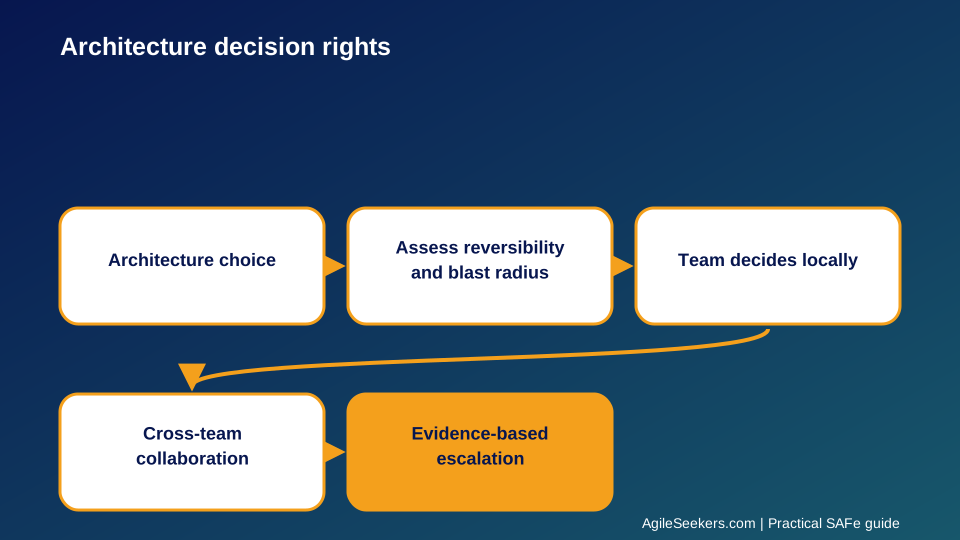
5. Define Clear Decision Boundaries

The fastest teams are the ones that know exactly which decisions they own. A simple boundary model solves half of the governance friction.

  • Teams own component-level design and refactoring choices
  • Architects own technology standards, API contracts, and cross-team integration rules

6. Shift Governance Conversations Into the Flow of Work

Instead of formal review boards, use ongoing touchpoints such as iteration reviews, architecture syncs, system demos, and backlog refinement. This makes governance natural, incremental, and predictable.

7. Provide Ready-to-Use Patterns and Templates

Teams accelerate when they don’t have to reinvent common components. Provide patterns for integration, security, testing, logging, DevSecOps pipelines, and data flows. These reduce cognitive load and eliminate unnecessary debates.

8. Balance Intentional and Emergent Architecture

SAFe promotes both structured architectural direction and adaptive learning. Architects guide—but teams evolve solutions through discovery. This balance keeps governance practical and grounded in real delivery.

How Architects Speed Up Teams Instead of Slowing Them Down

Bring Data, Not Opinions

Architects earn influence when they bring insights such as performance benchmarks, integration failures, or security gaps. Data-driven governance improves decision quality.

Solve Problems With Teams

Architects who collaborate during spikes, join debugging sessions, or help refine large stories build trust. This partnership mindset strengthens flow across ARTs.

Automate Governance Wherever Possible

Automated linting, CI checks, pipeline templates, and IaC guardrails remove manual oversight. When governance runs inside the development pipeline, it becomes invisible yet effective.

Explain the Why Behind Every Rule

Teams follow standards more consistently when they understand the reasoning behind them. Clear intent builds ownership, not resistance.

How SAFe Distributes Governance Without Creating Bottlenecks

Team Level

Teams shape local design decisions and tackle emergent architecture. Scrum Masters trained through SAFe Scrum Master certification help ensure architectural work flows smoothly through iteration cycles.

ART Level

System Architects handle cross-team alignment, integration, and quality attributes. RTEs with SAFe Release Train Engineer certification facilitate collaboration across the train.

Portfolio Level

Portfolio Architects influence technology strategies, guardrails, and long-term investment decisions. Leaders who complete Leading SAFe certification learn how architectural runway connects directly to Lean Portfolio Management.

External Guidance Helps Strengthen Good Governance

Several respected frameworks and research sources reinforce effective governance habits, including:

  • DORA’s State of DevOps reports
  • OWASP security guidelines
  • NIST cybersecurity frameworks
  • ThoughtWorks Technology Radar
  • SAFe’s official Architectural Runway guidance on the Scaled Agile website

These perspectives help teams make informed decisions grounded in proven practices.

How to Know If Your Governance Model Works

  • Teams deliver faster with fewer architectural conflicts
  • Dependencies become predictable
  • Enablers flow consistently
  • Architects join value conversations instead of firefighting
  • Integration issues drop significantly
  • Architectural debt doesn’t pile up

When governance empowers rather than restricts, teams feel lighter, conflicts reduce, and architecture supports—not blocks—innovation.

Final Thoughts

Architecture governance should never feel like an approval process. It should feel like clarity and long-term guidance. SAFe gives a strong structural foundation, but the real results come from how architects collaborate with teams.

Governance becomes a flow enabler when teams understand what good looks like, where they have autonomy, and how architectural decisions influence system health. Anyone deepening skills through SAFe Advanced Scrum Master training sees how architecture, flow, and collaboration need to work together.


Also read - Building an Effective Enabler Strategy Across Teams, ARTs, and Portfolios

Also see - Readiness Checklist for Launching Your First Agile Release Train

Share This Article

Share on FacebookShare on TwitterShare on LinkedInShare on WhatsApp

Have any Queries? Get in Touch