Most organizations don’t fail because of lack of effort. They struggle because work slows down in places no one can clearly see. Teams stay busy, dashboards look active, and yet delivery feels inconsistent.
That gap usually comes down to bottlenecks.
Here’s the problem: traditional ways of spotting bottlenecks rely on human observation. Managers look at reports. Scrum Masters run retrospectives. Leaders depend on intuition. By the time a bottleneck becomes obvious, it has already delayed outcomes.
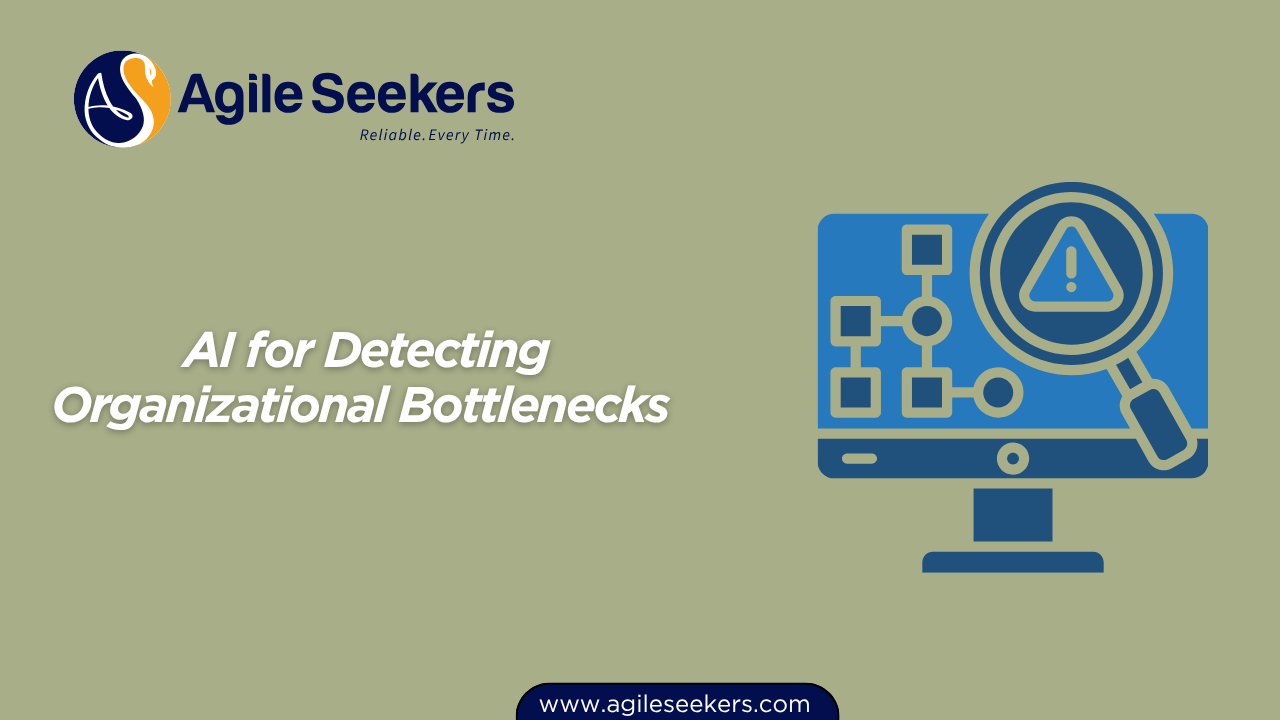
This is where AI changes the game. Not as a replacement for teams, but as a system that continuously watches how work flows and highlights friction before it becomes damage.
Let’s break down how AI helps detect organizational bottlenecks, what it actually looks like in practice, and how Agile teams can use it effectively.
What Is an Organizational Bottleneck?
A bottleneck is any point in your workflow where work slows down, piles up, or gets stuck.
In Agile environments, bottlenecks don’t always look obvious. They can show up as:
- Stories sitting too long in review
- Frequent spillover across sprints
- Dependency delays between teams
- Approval cycles slowing releases
- Overloaded specialists (like architects or QA)
The tricky part is this: teams often adapt around bottlenecks instead of solving them. They add buffers, extend timelines, or lower expectations.
That’s why detection matters more than reaction.
Why Traditional Bottleneck Detection Falls Short
Most organizations rely on a mix of standups, sprint reviews, and metrics like velocity or burndown charts. These are useful, but they only show part of the story.
Here’s where they struggle:
- Lagging indicators: You see problems after they happen
- Limited visibility: Data stays within team boundaries
- Human bias: Teams normalize inefficiencies over time
- Static analysis: Reports don’t adapt in real time
What this really means is that leaders often react to symptoms instead of identifying root causes.
How AI Detects Bottlenecks Differently
AI doesn’t rely on periodic reviews. It continuously analyzes how work flows across systems.
Instead of asking, “What went wrong last sprint?”, AI looks at patterns like:
- Cycle time variations
- Queue buildup across workflow stages
- Work item aging trends
- Dependency wait times
- Rework frequency
It connects signals across tools like Jira, Azure DevOps, and Git repositories. Then it surfaces patterns humans would typically miss.
For example:
- AI can detect that stories involving a specific component take 40% longer
- It can identify that approvals from a particular stakeholder consistently delay releases
- It can highlight that cross-team dependencies create hidden queues
This is not guesswork. It’s pattern recognition at scale.
Key AI Techniques Used for Bottleneck Detection
1. Flow Analysis
AI tracks how work moves through each stage of the workflow. It identifies where items spend the most time.
Instead of just seeing that delivery is slow, you see exactly where the slowdown happens.
Concepts like flow efficiency and throughput become more practical when AI continuously monitors them. If you want to understand flow deeply, resources like SAFe Flow Metrics offer a solid foundation.
2. Predictive Analytics
AI doesn’t just detect bottlenecks. It predicts them.
For instance, if backlog size increases and team capacity remains constant, AI can warn about an upcoming delay before it impacts delivery.
3. Dependency Mapping
In scaled Agile environments, dependencies are often the biggest hidden bottleneck.
AI maps dependencies across teams and tracks how delays propagate. This is especially useful in large setups like Agile Release Trains.
Professionals working with ARTs can benefit from structured learning through SAFe Release Train Engineer Certification Training, where dependency management plays a central role.
4. Anomaly Detection
AI identifies unusual patterns in workflow data.
Examples include:
- A sudden spike in cycle time
- Stories repeatedly moving back to development
- Unexpected delays in specific stages
These anomalies often point directly to bottlenecks.
5. Natural Language Insights
AI can analyze comments, tickets, and communication threads to detect recurring issues.
If multiple tickets mention unclear requirements or dependency blockers, AI flags it as a systemic problem.
Real-World Bottlenecks AI Can Uncover
Let’s make this practical.
Here are common bottlenecks AI can reveal:
1. Approval Bottlenecks
When decisions depend on a few individuals, work stalls.
AI tracks approval delays and highlights where decision-making slows flow.
2. Skill-Based Bottlenecks
If only one or two people can handle certain tasks, work queues build up.
AI detects repeated delays linked to specific roles.
3. Overloaded Teams
Some teams become dependency hubs. Everyone waits on them.
AI identifies workload imbalances across teams.
4. Poorly Defined Work
Stories that lack clarity often bounce between stages.
AI spots high rework rates and signals requirement issues.
Product professionals can strengthen backlog clarity through SAFe Product Owner and Manager Certification, which focuses on defining value-driven work.
5. Hidden Queues
Work sitting in “waiting” states often goes unnoticed.
AI makes these queues visible and measurable.
How AI Supports Different Agile Roles
For Scrum Masters
AI gives Scrum Masters a clearer view of team flow.
Instead of relying only on daily standups, they get data-backed insights into where work slows down.
Those looking to deepen their understanding can explore SAFe Scrum Master Certification, which aligns well with flow optimization practices.
For Product Owners and Managers
AI helps prioritize work based on flow constraints.
Instead of pushing more features, Product Owners can focus on removing bottlenecks that block value delivery.
For Agile Leaders
At the leadership level, AI provides system-wide visibility.
Leaders can see how decisions impact flow across multiple teams.
Programs like SAFe certification help leaders interpret these signals and act effectively.
For Advanced Practitioners
Experienced Scrum Masters and coaches can use AI insights to drive deeper improvements.
Training such as SAFe Advanced Scrum Master Certification Training helps in handling complex team dynamics and systemic bottlenecks.
Benefits of Using AI for Bottleneck Detection
- Real-time visibility: No need to wait for sprint reviews
- Data-driven decisions: Reduced reliance on assumptions
- Early detection: Problems identified before impact
- Cross-team insights: Better coordination in scaled environments
- Continuous improvement: Faster feedback loops
What this really leads to is smoother flow, predictable delivery, and better alignment between teams.
Challenges to Watch Out For
AI is powerful, but it’s not magic.
1. Poor Data Quality
If your tools don’t reflect actual work, AI insights will be misleading.
2. Over-Reliance on Metrics
Metrics should guide conversations, not replace them.
3. Resistance from Teams
Teams may feel monitored instead of supported.
This is where leadership matters. AI should be positioned as a support system, not a control mechanism.
Frameworks like Scrum emphasize transparency and inspection. AI simply enhances those principles.
Proven methods for Using AI Effectively
- Start with a clear goal: Don’t implement AI just for the sake of it
- Focus on flow metrics, not just output
- Combine AI insights with team discussions
- Use AI to highlight patterns, not assign blame
- Continuously refine your data sources
The goal is not to create more dashboards. It’s to improve how work moves.
The Bigger Shift: From Activity to Flow
Most organizations still measure success based on activity.
Number of tasks completed. Number of hours logged. Number of features delivered.
AI pushes a different perspective.
It shifts focus toward flow:
- How fast work moves
- Where it gets stuck
- How smoothly teams collaborate
This shift is critical for scaling Agile effectively.
Final Thoughts
Bottlenecks are not always visible, but they are always present.
Ignoring them leads to delays, frustration, and missed opportunities.
AI gives organizations a way to see what was previously hidden. It connects data across systems, identifies patterns, and highlights where improvement matters most.
But the real value doesn’t come from the technology itself.
It comes from how teams use those insights.
When combined with strong Agile practices, clear leadership, and a focus on flow, AI becomes more than a tool. It becomes a guide for continuous improvement.
And that’s where real progress begins.
Also read - Training Agile Leaders to Work Alongside AI Systems
Also see - How AI Can Improve Retrospective Quality