Every Product Owner or Product Manager aims for the same core outcome: value delivered to the customer at the right time. But the path to value is rarely linear. Work items wait in queues, teams juggle multiple priorities, dependencies slow momentum, and strategic alignment sometimes gets diluted along the way. This is where understanding flow distribution becomes essential.
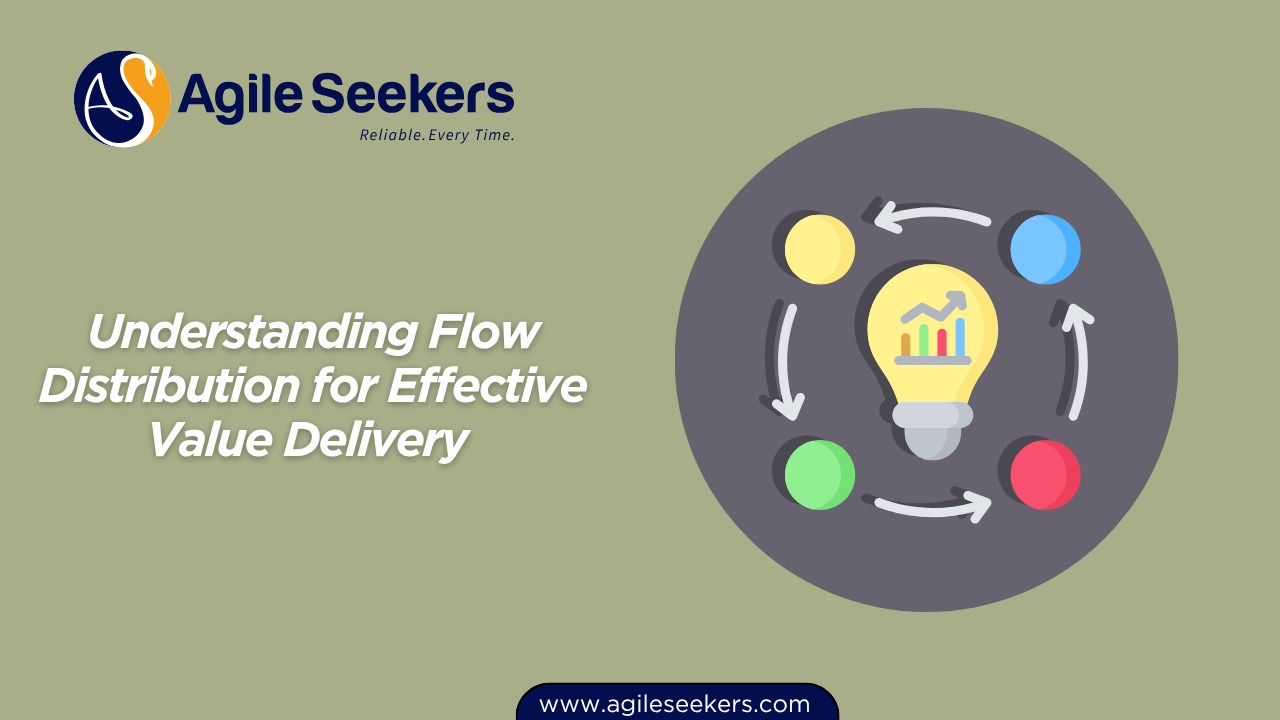
Flow distribution is about how work gets allocated and moves across the system. It helps you see not only what the team is working on, but why, and whether that work aligns with business outcomes. When handled well, flow distribution becomes a guiding lens for decision-making and prioritization.
If you’re exploring how to deepen your role as a PO or PM inside a SAFe environment, formal training like the POPM certification provides structured understanding on this and many related flow concepts.
What Do We Mean by Flow Distribution?
Flow distribution is the proportion of work types a team or Agile Release Train (ART) is processing. Common categories include:
- New Feature Development
- Enablers and Architecture Work
- Technical Debt Reduction
- Defect Resolution
- Operational Support Work
The question isn’t just what the team is doing but how much of each type. When one category dominates disproportionately, system performance shifts. For example:
- If new features dominate, quality may suffer later.
- If technical debt gets ignored, delivery slows over time.
- If too much time is spent fixing defects, team morale dips.
So the real focus is on balance. Balance creates flow. Flow creates predictability. Predictability creates trust.
Why Flow Distribution Matters to Value Delivery
Teams often fall into reactive work modes. Priorities shift based on loud voices rather than strategic context. Flow distribution brings clarity because it anchors discussions around:
- Business priorities
- Economic impact
- Technical sustainability
- Customer outcomes
It also ties closely to Little’s Law, which highlights the relationship between cycle time, throughput, and work in progress (WIP). If WIP is too high due to badly distributed work, cycle times increase, and customers wait longer for value.
So by managing flow distribution, we indirectly manage delivery speed and quality.
How to Identify Your Current Flow Distribution
Start with data. Not assumptions. Not gut instinct. Actual work item history.
Look at:
- Completed work from previous iterations or Program Increments
- Work type tags in Jira, Azure DevOps, or Rally
- Historical allocation patterns
Plot these as percentages. For example:
| Work Type | Last PI Distribution |
|---|---|
| New Features | 60% |
| Defects | 20% |
| Technical Debt | 10% |
| Enablers | 10% |
This snapshot instantly tells you whether your distribution supports sustainable delivery.
Common Anti-Patterns in Flow Distribution
Certain patterns show up frequently, especially when strategy and execution aren't aligned well. Examples include:
1. Feature Factory Syndrome: Teams feel pressured to deliver visible output constantly. Technical work and improvements get sidelined. The system slows over time.
2. Firefighting Mode: Too much time spent on defects or urgent issues means root causes never get addressed.
3. Architecture Avalanche: Teams over-invest in technical foundation work without validating value delivery, delaying customer outcomes.
Recognizing these early helps you correct direction before momentum stalls.
How POPMs Influence Flow Distribution at Scale
This is where the Product Owner/Product Manager role becomes strategic. POPMs are responsible for aligning the backlog with value objectives and ensuring the flow of work matches organizational needs.
If you want to dive deeper into these responsibilities and the decision frameworks behind them, explore SAFe Product Owner and Manager Certification learning paths.
Key Areas Where POPMs Guide Flow Distribution
- Prioritization: Choosing what matters now vs. later.
- Capacity Allocation: Pre-deciding how much time goes to each work category.
- Backlog Hygiene: Preventing clutter and chaos.
- Risk-Based Thinking: Preventing bottlenecks before they appear.
Using Capacity Allocation to Shape Distribution
Capacity allocation is the SAFe practice that ensures the team intentionally divides time across flow categories.
For example:
- 60 percent on feature work
- 20 percent on enablers
- 10 percent on defects
- 10 percent on improvements
This ensures strategic balance, not reactive shifts.
To formalize this skill, many professionals pursue POPM certification Training which provides guidance on backlog strategy and flow management.
Improving Flow Distribution: Practical Steps You Can Start Now
1. Visualize the Work
Use Kanban systems. Make invisible work visible.
2. Limit Work in Progress
Less WIP equals faster flow and clearer priorities.
3. Classify Work Types Correctly
Ensure everyone agrees on what counts as feature work vs. tech debt vs. enablers.
4. Review Distribution Every PI
Treat it as a regular improvement metric, not a one-time check.
5. Let Outcomes Drive The Conversation
The real question is not how busy the team is, but whether value is emerging.
The Role of Product Owners and PMs in Sustaining Healthy Flow
This is where the role expands from operational to strategic. Product Owners and Product Managers act as translators, connecting customer value, business strategy, and execution capacity.
Developing this capability often begins with structured development like product owner certification where techniques for prioritization, backlog architecture, and flow alignment are covered in depth.
Final Thoughts
Flow distribution is not just about how work is categorized. It’s a reflection of how clearly your product direction is understood and how consistently priorities are applied. When you manage flow distribution intentionally, the entire delivery system stabilizes. The conversations shift from firefighting to progress, from urgency to clarity, from output to outcomes.
Understanding flow is one part. Influencing it is another. Mastering both is where strong POPMs make their mark.
Also read - How POPMs Guide Teams Toward Incremental Innovation
Also see - How POPMs Support Non Functional Requirement Management