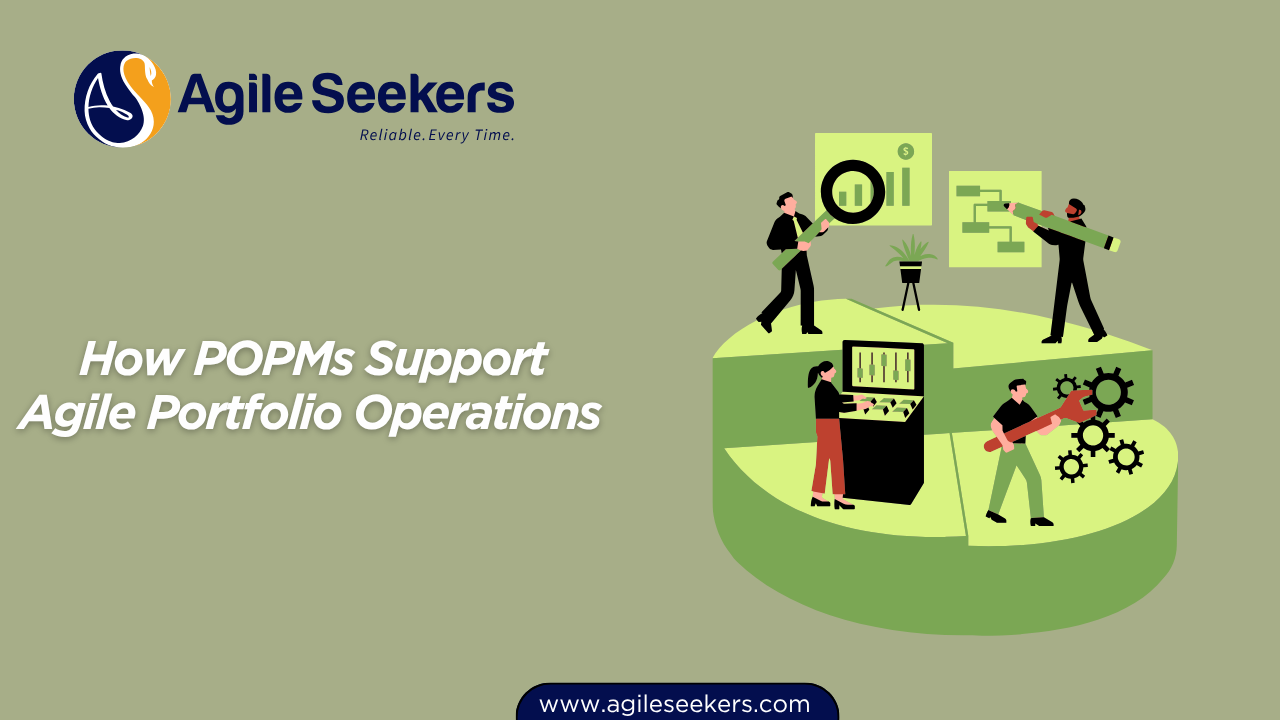
Agile Portfolio Operations shape how organizations make investment decisions, align work with strategy, and manage value streams at scale. But strategy alone doesn’t deliver outcomes. Execution does. This is where the Product Owner / Product Manager (POPM) role becomes essential. The POPM works at the point where strategy meets delivery, ensuring that the priorities defined at the portfolio level translate into meaningful work on the Agile Release Train (ART).
If someone wants to build this expertise in practice, taking a structured learning path such as the POPM certification can help build the instincts required to operate confidently at both team and strategic layers.
What Agile Portfolio Operations Aim to Achieve
Agile Portfolio Operations exist to ensure that organizational goals convert into measurable value. They focus on aligning budgets to strategy, coordinating work across value streams, and creating transparency into progress and outcomes. Instead of pushing work downward through command structures, the portfolio sets direction and allows the execution ecosystem to pull the most valuable work.
However, the execution layer needs guidance, clarity, and prioritization logic. POPMs bring that clarity.
The POPM’s Role in Strategic Alignment
POPMs take top-level business priorities and interpret them into practical plans. They translate strategy into features, user stories, and acceptance criteria that teams can actually deliver. More importantly, they explain the why behind work, ensuring the team understands the value and customer outcomes being targeted.
For professionals who want to strengthen this strategic-execution alignment skillset, training like the SAFe Product Owner and Manager Certification provides practical frameworks to support alignment across the portfolio, ART, and team levels.
Supporting Portfolio-Level Prioritization
Most portfolio decisions rely on prioritization frameworks such as WSJF. While leadership may define investment themes, POPMs supply the data that makes prioritization accurate: customer need signals, market feedback, effort estimates from teams, technical risks, and dependency visibility across systems.
Without reliable input from POPMs, prioritization becomes guesswork. With good input, it becomes a rational, transparent decision that balances effort with value.
Enabling Value Stream Flow
Value flows smoothly when teams are not blocked, when priorities are clear, and when there is a shared understanding of why the work matters. POPMs support flow by:
- Maintaining clean, well-understood backlogs
- Helping refine features into achievable slices of value
- Ensuring priorities reflect real outcomes, not loud voices
- Removing unnecessary or low-value work
Continuous flow is not a result of speed alone. It’s a result of clarity and alignment, which are driven by the POPM role.
Driving Transparency Across the Portfolio
Transparency is one of the core responsibilities of Agile Portfolio Operations. POPMs help maintain this transparency by communicating progress with stakeholders, sharing customer feedback, showing value delivered vs. expected, and highlighting risks early. This creates trust and reduces the need for heavy governance structures.
Collaboration with RTEs, Product Managers, and Business Owners
POPMs rarely operate alone. They collaborate continuously with Release Train Engineers, Product Managers, Business Owners, System Architects, and teams. This collaboration ensures that strategic intent does not get lost once work begins. Meaningful collaboration prevents misalignment and rework.
Professionals who want hands-on tools for working within this collaborative ecosystem often explore POPM certification Training to understand how to guide multiple teams while representing customer value effectively.
Lean Governance and Data-Driven Decision Making
Lean Governance relies on evidence more than assumptions. POPMs contribute by tracking outcomes, measuring the impact of releases, and sharing insights with portfolio leaders. This helps refine strategies and adjust investments based on real-world learning rather than plans made months earlier.
Tying Work to Strategic Themes and OKRs
Strategic themes define high-level direction. OKRs define measurable goals. POPMs help translate both into features and iteration goals that make sense on the ground. This alignment ensures execution always points toward business outcomes, not just activity.
The Skillset Required to Support Portfolio Operations
To support Agile Portfolio Operations effectively, POPMs need strong customer empathy, system thinking, prioritization discipline, and confident communication. These are not theoretical skills; they are developed through experience and practical training.
A structured skill-development route like product owner certification helps professionals move from task-level prioritization to strategic product leadership.
Final Thoughts
POPMs are the connective link between strategy and execution. They ensure the organization is not just working hard, but working on the right things. Their role supports flow, clarity, value measurement, transparency, stakeholder alignment, and continuous learning across the portfolio.
When POPMs do their job well, Agile Portfolio Operations run smoothly, and organizations deliver real value instead of just output.
Also read - The Role of POPMs in Continuous Improvement Culture